
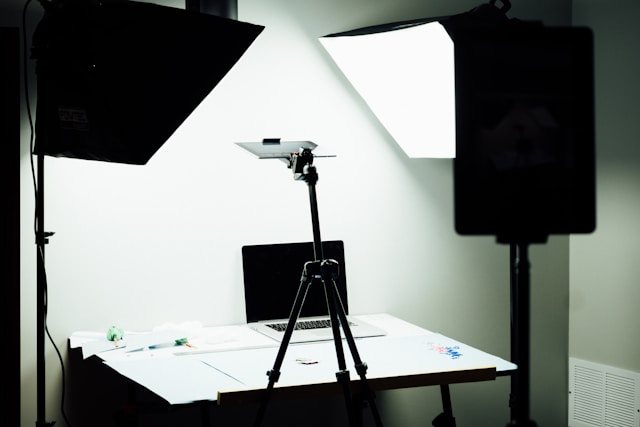
Stop Motion Ideas – Implementation to Real Game Projects
There’s something timeless about stop motion. Maybe it’s the way it turns the ordinary into something extraordinary — a cup that walks, a sock that falls in love, a cookie that escapes its plate. Or maybe it’s the tactile charm — the handmade feel that digital animation can’t quite replicate. Whatever it is, stop motion ideas have a rare power: they make us believe that anything can come to life.
And the best part? You don’t need a big studio to make something amazing. A desk, a camera, and imagination — that’s your entire toolkit for stop motion development. Let’s unpack how creativity, rhythm, and a bit of patience can transform the simplest objects into captivating stories.
Expert note: Plan beats before frames. Lock camera and exposure, shoot at consistent framerate (12–24 fps), and use onion-skin/live-view to control spacing. Minor imperfections are charm — but avoid lighting flicker, drifting focus, and unstable rigs.
The Soul of Stop Motion
Stop motion isn’t about perfection. It’s about rhythm — movement built one heartbeat at a time. Every tiny nudge matters; every shadow tells a story. It’s animation stripped down to its essence: stillness and change.
But before you press record, remember — great stop motion ideas start with curiosity. Ask yourself: what if this object had feelings? What if gravity worked differently for a moment? These questions spark worlds. The secret isn’t technology — it’s imagination.
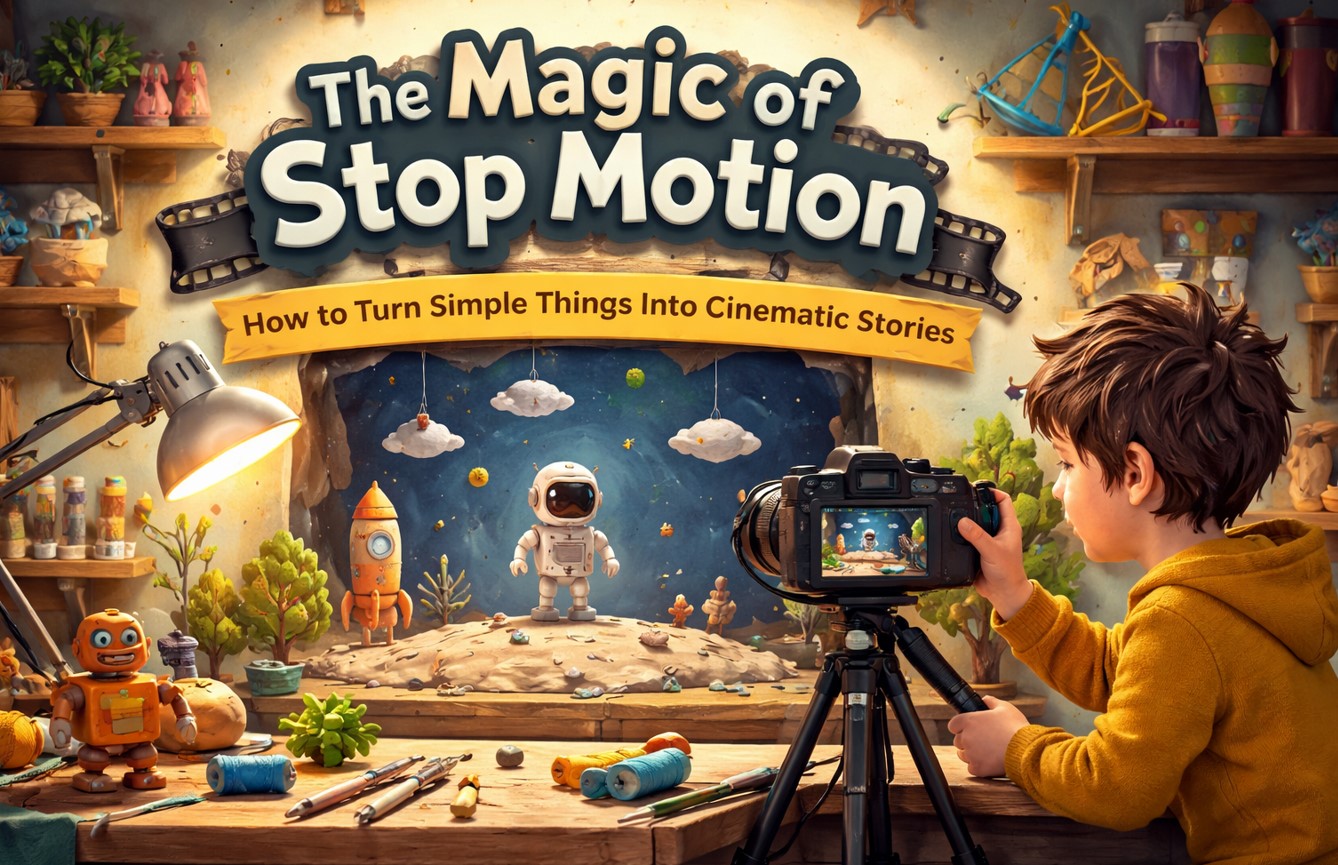
Classic Stop Motion Ideas That Always Work
You don’t have to reinvent cinema. Sometimes, the simplest setups become the most iconic shorts. Here are a few tried-and-true stop motion ideas you can adapt or twist in your own way:
- Everyday object adventures: Pens, coffee cups, socks — give them goals, fears, or friendships.
- Food choreography: Animate fruit slicing itself, cereal marching in sync, or cookies rebelling against being eaten.
- Paper transformations: Fold, tear, and evolve — origami that turns into animals, cities, or dreams.
- Clay creatures: The classic claymation — it never fails to charm. Give life to blobs, monsters, or abstract shapes.
- Miniature worlds: Create tiny sets — a city built from buttons or a forest made of broccoli.
Simple, right? The trick is personality. Even a potato can become a hero if you give it purpose.
| Idea Type | Props & Setup | Story Hook | Difficulty |
|---|---|---|---|
| Everyday Object Adventure | Desk items, blu-tack, simple rig | “The mug that wants a view by the window.” | Easy |
| Food Choreography | Cutting mat, non-slip surface, tweezers | “Cookies escape the plate before tea time.” | Easy–Medium |
| Paper Transformations | Cardstock, craft knife, overhead camera | “A letter folds itself into a bird and flies.” | Medium |
| Clay Creatures | Plasticine, wire armature, texture tools | “A blob learns to wave — and say goodbye.” | Medium |
| Miniature Worlds | Kitbash props, foam board, macro lens | “A button-city wakes up for rush hour.” | Medium–Hard |
The Power of Storytelling
Stop motion may rely on visuals, but storytelling is what makes people care. A strong idea doesn’t need dialogue — it needs emotion. Think of your short as a silent film: everything must be told through rhythm, movement, and light.
A few quick storytelling rules:
- Keep it short. The best stop motion films make one point brilliantly.
- Use rhythm. Music or beats can guide timing — movement should flow like melody.
- Show emotion. A tilt, a pause, a stumble — these tiny gestures speak louder than dialogue.
Every memorable stop motion idea has a heartbeat — something the viewer feels rather than just sees.
Where Inspiration Comes From?
Need a spark? Inspiration hides everywhere — you just need to look differently.
- Nature: A seed sprouting frame by frame, waves forming from fabric, a shadow “walking” along a wall.
- Household chaos: Keys that sneak away, shoes that argue, a cup tired of holding coffee.
- Seasons and holidays: Falling leaves assembling into creatures, snowflakes forming patterns, gifts wrapping themselves.
- Abstract emotions: Loneliness, curiosity, joy — animate colors, textures, or shapes to express them visually.
The more personal your theme, the stronger the connection. Stop motion rewards emotion over perfection.
Tools That Help (Without Killing the Handmade Feel)
You don’t need fancy gear, but a few tools make life easier:
- A tripod — stability in video games is everything.
- Consistent lighting — avoid flicker; natural light changes fast.
- Stop motion software — apps like Dragonframe, Stop Motion Studio, or Blender keep your workflow organized.
- Patience — your secret weapon.
Remember, each second equals 12–24 frames. That means even a five-second scene can take hours — but that’s where the magic lives. Every frame is a heartbeat of your story.
| Stage | Focus | Common Pitfalls | Quick Fixes |
|---|---|---|---|
| Pre-production | Beat sheet, thumbnails, shot list | Over-scoping, unclear ending | Limit to 1 idea; storyboard 6–12 key beats |
| Set & Props | Stable rigging, readable scale | Wobble, props drifting out of frame | Weight bases, mark positions with tape |
| Lighting | Locked exposure/white balance | Flicker, shifting color temps | Use continuous lights; block windows; manual settings |
| Shooting | Consistent spacing, clean arcs | Jitter, uneven timing | Onion-skin; count frames; shoot holds & anticipations |
| Post | Sound design, grading, cleanup | Noisy plates, weak audio | Denoise, gentle LUT, foley for character beats |
Modern Trends in Stop Motion
Stop motion isn’t just old-school nostalgia anymore — it’s thriving on social media, in advertising, and even in big-budget cinema. Let’s see where the best stop motion ideas are heading today:
- Short-form storytelling: Instagram and TikTok love micro-narratives — 15 seconds of pure creativity.
- Hybrid aesthetics: Mixing stop motion with CGI or real footage for surreal juxtapositions.
- DIY minimalism: Paper, sand, recycled materials — low-budget, high-creativity content.
- Tactile branding: Brands use handcrafted textures to stand out in the digital noise.
Even with AI dominating the creative scene, people crave authenticity — and stop motion delivers it frame by frame.
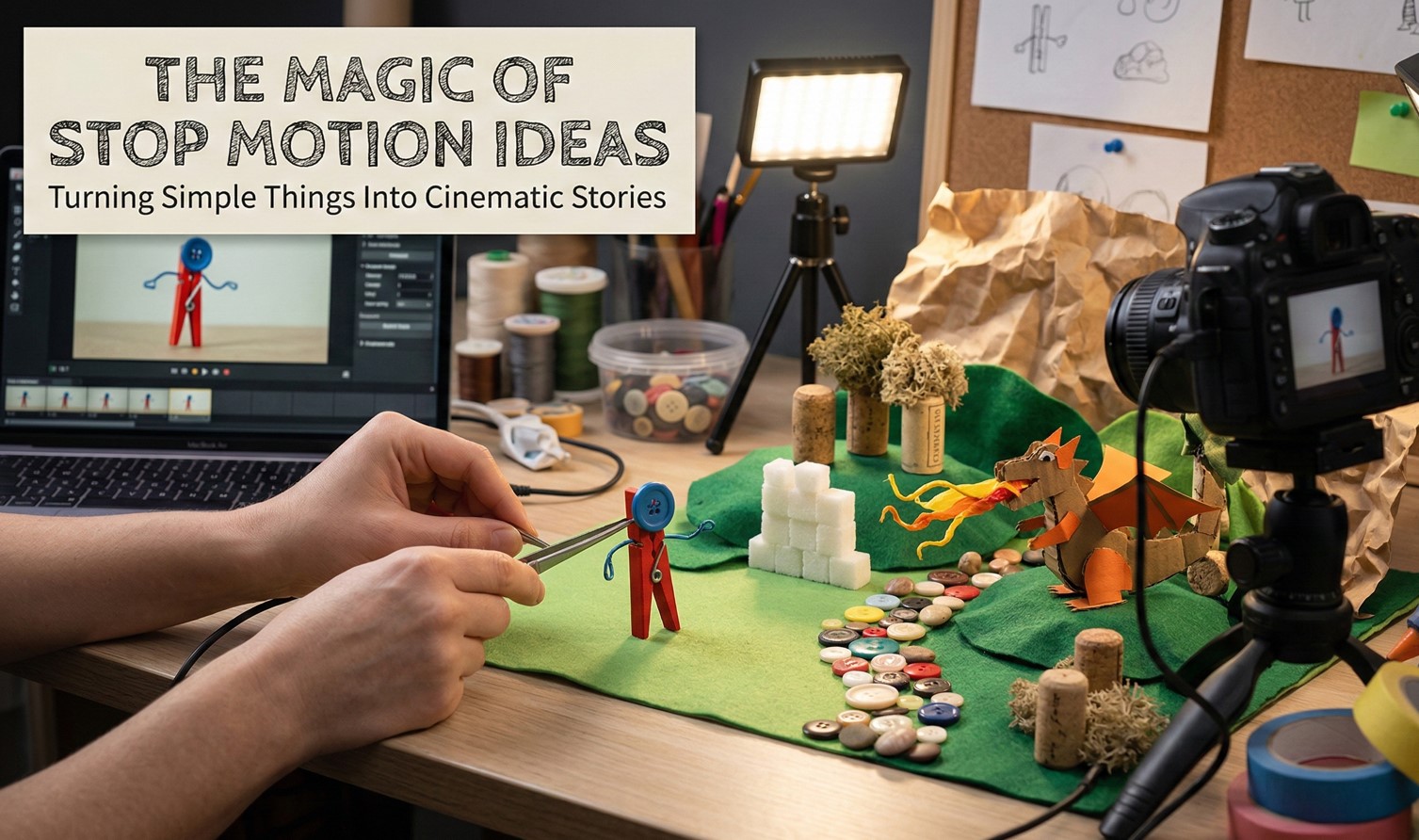
Common Pitfalls to Avoid
Some mistakes can drain the magic from your work. Here’s what to watch out for:
- Inconsistent lighting — creates distracting flicker.
- Too much motion — subtlety matters; exaggeration should serve emotion.
- No focus on story — pretty visuals mean nothing without narrative flow.
- Ignoring timing — if pacing feels off, the illusion breaks.
- Perfectionism — small imperfections make it real.
Stop motion thrives on charm, not precision.
The Emotional Hook
At its core, stop motion is empathy. You take lifeless things and make them dream, struggle, or love. That’s powerful. It’s why even short clips — like a clay blob waving goodbye — can leave viewers misty-eyed.
If you can make someone feel for a spoon or a sock, you’ve done more than animate — you’ve created connection.
Final Thoughts
The best stop motion ideas aren’t born from big budgets or professional animation studios. They start with curiosity — a spark of “what if?” and the patience to bring it to life, one frame at a time.
So look around your room right now. Maybe your eraser wants to escape. Maybe your teacup’s bored. Maybe your plant dreams of dancing. That’s where it begins.
Because stop motion isn’t just about movement — it’s about breathing life into the still, and finding stories hidden in plain sight.
And if that’s not magic, what is?