
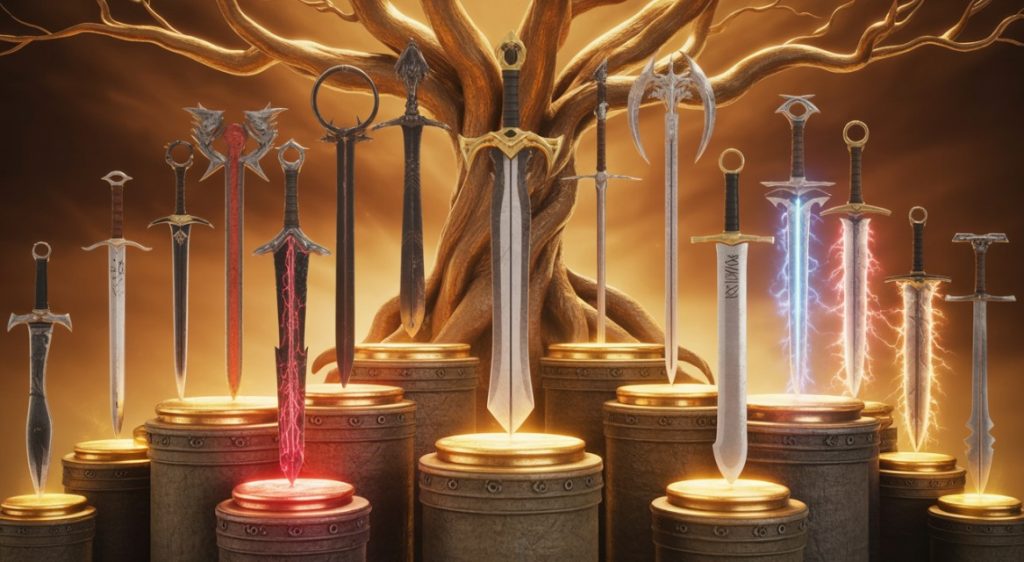
A Deep-Dive into the Elden Ring Weapon Tier List
Honestly, choosing a main weapon in Elden Ring can feel like a whole separate boss fight, can’t it? You stumble upon a new sword, a massive hammer, or maybe some funky twinblades, and your mind immediately jumps to, “Is this the one? Is this the weapon that’s going to make Malenia finally weep?” The Lands Between are absolutely packed with weapons – we’re talking hundreds – and trying to sort the genuine legendaries from the glorified scrap metal is a proper journey itself. That’s where a good, current Elden Ring weapon tier list comes in handy.
The thing is, what’s “best” changes constantly. FromSoftware, bless their hearts, are always tinkering with the numbers. One patch, your favorite Greatsword crouch-poke is king; the next, it’s just… okay. So, we’re looking at things with a fresh perspective, considering the latest patches, like the ones that have been re-jigging poise damage and giving some love to previously overlooked weapon classes like Hand-to-Hand Arts and Colossal Swords. You know what? It’s not just about the raw damage numbers anymore. It’s about the whole package: the Weapon Skill, the reach, the vibes it brings to your specific build.
Let me explain the whole Elden Ring weapon tier list situation right now – it’s not a final, set-in-stone decree. An Elden Ring weapon in B-Tier can feel utterly S-Tier in your hands if you have the stats, the Talismans, and the playstyle to back it up. But these tiers are meant to give you a solid starting point, a guide to what the community generally agrees are the heavy-hitters, the reliable workhorses, and the delightful oddballs. We’re going to break this down by how effective these weapons are, especially in the grueling PvE environment against those ridiculously oversized bosses and even the occasional PvP dust-up.
Tiers of Terrifying Toolboxes: How We Rate the Weapons
Before we get into the shiny specifics, let’s talk about the structure. A true Elden Ring weapon tier list needs some structure, right? We’re going from S (Simply Superior) down to B or C (Barely Competent or Contextually Cool). Anything below that? Well, it probably just needs a patch or is purely for the fashion souls crowd, and there’s no shame in that:
- S-Tier (The God-Rollers): These are the weapons that are just busted. They have amazing Weapon Skills, stellar scaling, often inflict ridiculously strong status effects (looking at you, Bleed), and generally just melt everything. If you see one of these, you build your entire character around it. They are the meta-defining pieces of gear.
- A-Tier (The Workhorses): Excellent, reliable, and powerful. They might not have the sheer “delete button” capability of S-Tier weapons, but they are incredibly versatile, have great movesets, or shine brightly in a specific, popular build (like pure Strength or pure Sorcery). You can confidently finish the game with any A-Tier weapon.
- B-Tier (The Solid Contenders): These are good weapons. Really, truly good. They’re often fantastic early-game finds that eventually fall off a tiny bit, or they require a highly specific build to reach their true potential. They’re absolutely viable, but they won’t carry you quite as effortlessly as the higher tiers.
👑 S-Tier: The Melt Buttons and Meta-Masters
This is where the legends live. These RPG weapons have been consistently dominant, often surviving patches that tried to temper their power. They make you feel like the Elden Lord you were meant to be – powerful, perhaps a little cheesy, but undeniably effective.
Blasphemous Blade: The PvE MVP, Hands Down
You want to talk about raw power mixed with utility? The Blasphemous Blade is probably the strongest overall PvE weapon in the game. It’s a Greatsword that scales with Strength, Dexterity, and Faith – a solid hybrid setup.
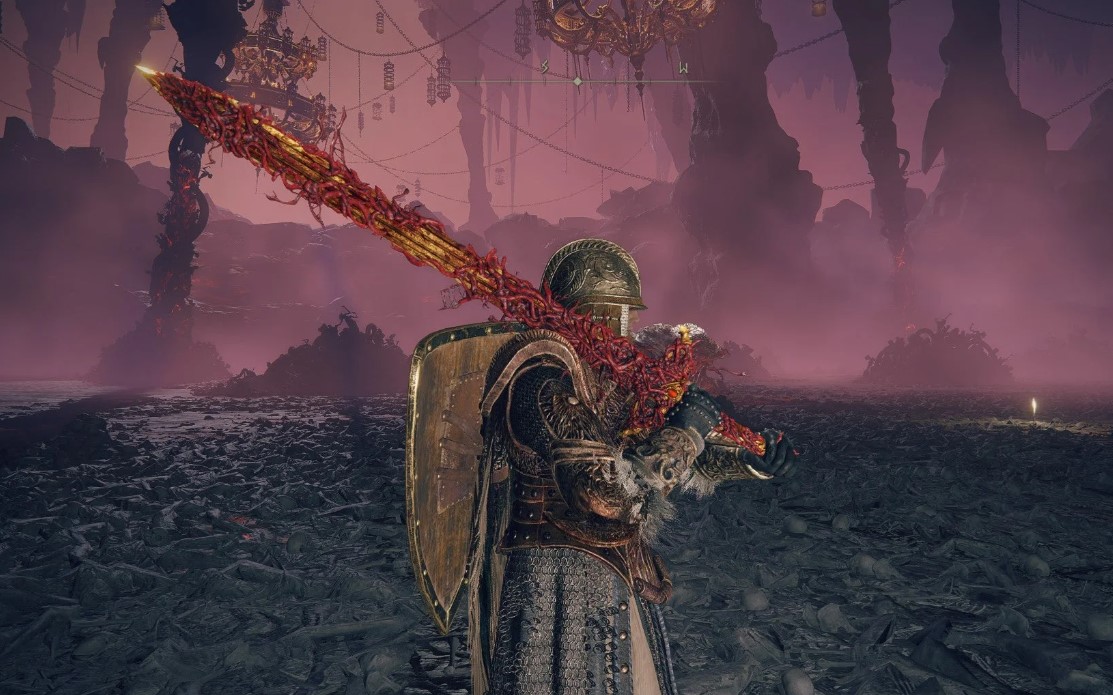
The real kicker here is the Weapon Skill: Taker’s Flames. This thing is utterly absurd. It’s a massive wave of fire that hits hard, has good range, and, most importantly, heals you for a percentage of the damage dealt. Think about that: you attack, you deal huge damage, and you get health back. Against groups of enemies? You’re basically unkillable. Against bosses? It deals fire damage, which many bosses are weak to, and its sheer poise damage means you’re often interrupting their attacks. Honestly, it’s almost like cheating. If you’re struggling with the back half of the game, go get this thing by beating Rykard and trading his Remembrance. It’s a genuine game-changer.
Rivers of Blood: The Bleed Baron, Still Relevant
Ah, the infamous Rivers of Blood. Even after several tuning patches, this katana remains a monster for Arcane/Dexterity builds, especially if you’re into the bleed status effect. Status effects, by the way, are basically the game’s way of saying, “Yeah, their HP is high, but here’s a shortcut.” Bleed, in particular, builds up and then delivers a massive chunk of flat damage.
What makes Rivers of Blood so good is its Weapon Skill, Corpse Piler. It’s a series of quick, bloody slashes that not only deal high physical and fire damage but stack Bleed ridiculously fast. It’s a total blender, especially in PvP, where it’s still notorious. For PvE, bosses that can bleed (which is most of them) get absolutely shredded. It’s a late-game weapon, but definitely worth the investment for an Arcane build.
Mohgwyn’s Sacred Spear: Area Damage for the Blood Lord
Another one for the Arcane faithful, the Mohgwyn’s Sacred Spear is just excellent. It’s a Great Spear, which already gives it fantastic reach and a great moveset for keeping distance, but the star is the Weapon Skill: Bloodboon Ritual.
This skill plants the spear and causes three massive explosions of blood around you. It’s fantastic for crowd control (clearing out mobs is a breeze), but against big, slow bosses, you just plant it right beneath them and watch the damage numbers pile up. Plus, it causes a huge amount of bleed buildup over a large area. It really leans into that whole “Blood Lord” aesthetic, doesn’t it? It’s a little slower than the Rivers of Blood, but its sheer area-of-effect potential keeps it firmly in S-Tier.
🗡️ A-Tier: The Reliable Powerhouses
These weapons are maybe a hair below the S-Tier lunatics, but they’re incredibly potent, often dominating their specific build categories. They require a bit more finesse or commitment, but reward you with truly elite performance.
Dark Moon Greatsword: The OG Intelligence Blade
Listen, Souls veterans know the drill: if there’s a giant, shimmering Moonlight Greatsword in the game, it’s going to be good. The Dark Moon Greatsword is the Elden Ring version, and it definitely keeps the tradition alive. This Greatsword is the ultimate Intelligence weapon.
Its Weapon Skill is beautiful: it buffs the sword with a shimmering magic glow, giving it an additional chunk of Magic damage and, here’s the best part, all your heavy attacks launch powerful magic projectiles. This effectively gives a slow, heavy melee weapon incredible, fast-firing ranged options. It scales primarily with Intelligence, so all those points you dump into being a powerful sorcerer? They also make your massive sword a force of nature. It’s earned by following Ranni’s questline – a journey well worth taking.
Bloodhound’s Fang: Early Game MVP that Goes the Distance
The Bloodhound’s Fang is probably the best example of a weapon you can grab early in the game that will absolutely carry you to the credits. It’s a Curved Greatsword with good Strength and Dexterity scaling (a “Quality” weapon, if you want to get technical), and it inflicts bleed.
What makes it A-Tier is its Weapon Skill, Bloodhound’s Finesse. It’s a quick, high-damage slash followed by a magical backstep that makes you invulnerable for a moment. It’s a built-in dodge and attack. This lets you trade blows, deal massive damage, and then instantly get out of danger. Honestly, for the low stat requirements and how early you can grab it (just by beating Bloodhound Knight Darriwil in Limgrave), it’s phenomenal. You’ll see this bad boy in a lot of “best early game weapon” lists, and it stays strong right into the endgame.
Sacred Relic Sword: Farming and Fun
This Greatsword, which you get from the final boss Remembrance, is a Faith/Dex weapon, but its true power lies in its Weapon Skill: Wave of Gold.
You fire off a massive, sweeping wave of pure Holy damage that covers an enormous distance. It’s ridiculously satisfying to use. While it’s great for damage against non-Holy-resistant enemies, its real value is for rune farming. Point it at a big group of enemies (like those albinaurics on the ridge in Mohgwyn Palace), press the button, and watch the runes pour in. It’s efficient, it’s fun, and it’s a necessary tool for any serious Elden Ring player – that utility alone bumps it to A-Tier.
🛡️ B-Tier: Solid, Build-Defining Options
These weapons are fantastic when used correctly. They often rely heavily on one stat, a specific Ash of War, or a unique playstyle. If your build is tailored to them, they can feel like A-Tier, but they don’t have the same general-purpose dominance.
Grafted Blade Greatsword: Because Big Numbers Make Brain Go Brrr
Look, sometimes you just want a massive sword that makes you feel like you’re playing Berserk. The Grafted Blade Greatsword – the one with all the swords grafted onto it, like a metallic centipede – is that weapon.
It’s a Colossal Sword that needs a ton of Strength. Its Weapon Skill, Oath of Vengeance, dramatically boosts your stats (Strength, Dexterity, Endurance, Vigor, and Mind) and increases your Poise for 30 seconds. Poise, for the uninitiated, is basically how much you can tank a hit without getting staggered. When you pop this skill, you turn into a walking tank that deals outrageous damage. The recent Colossal Sword buffs have definitely made this category feel better, giving them faster initial attacks and better movement during their swings, which is a huge deal.
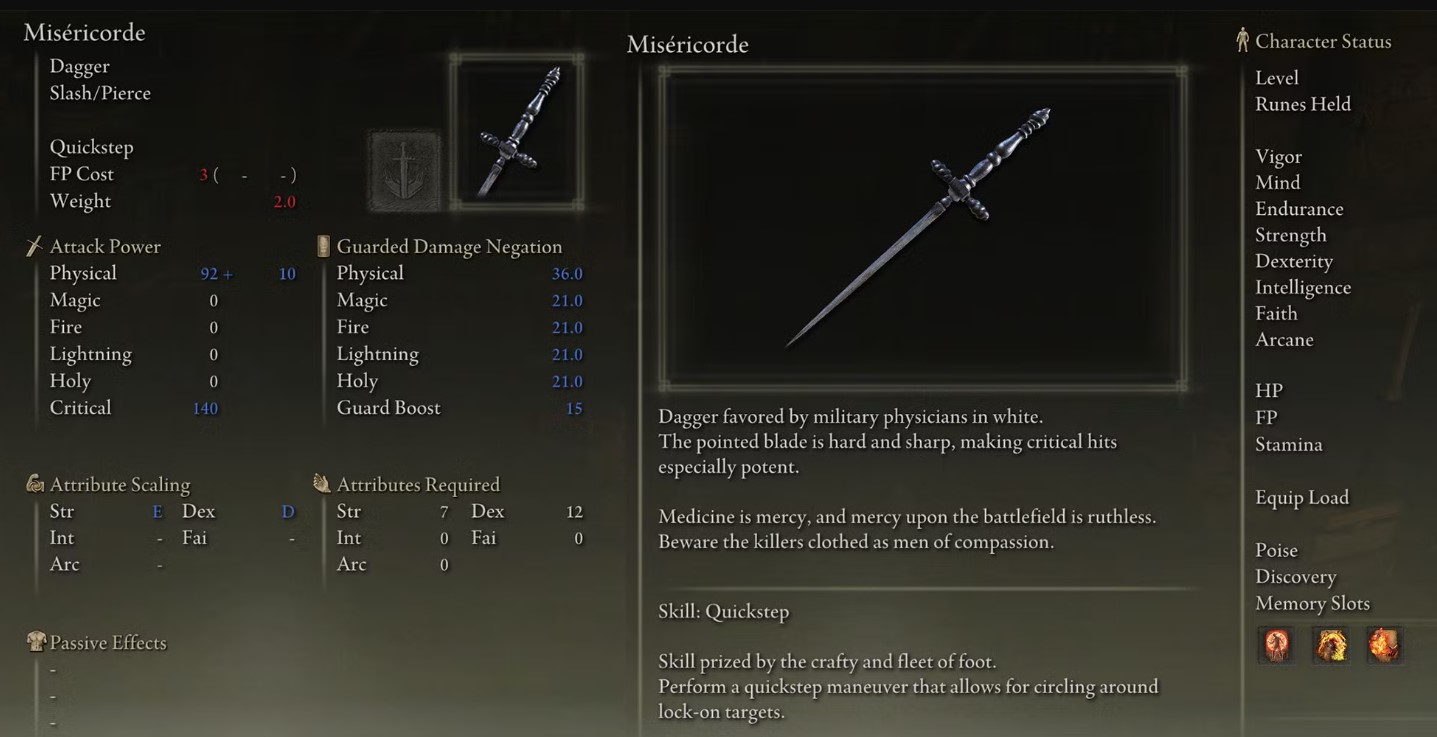
Misericorde: The King of Criticals
If you love backstabs and parry-ripostes, the Misericorde Dagger is what you need. It might not look like much, but it boasts the highest critical hit rating (140) in the entire game.
Daggers aren’t for hacking and slashing – they’re for exploiting openings. When you successfully parry a boss or sneak up for a backstab, you want this little blade in your hand. Slap a good Ash of War like Flame of the Redmanes (for its high poise damage) on a different weapon, stagger the enemy, then switch to the Misericorde for the absolutely massive critical hit. It’s a secondary weapon, really, but it’s essential for certain high-skill plays.
The Standard Straight Sword: Don’t Sleep on the Basics
I know, I know – a Straight Sword? Like the Longsword or Broadsword? Hear me out. Standard straight swords are the ultimate blank canvas. They’re fast, have a great, safe moveset, use minimal stamina, and, crucially, can accept nearly any Ash of War.
This flexibility is their true power. You can make it a “Heavy” straight sword for a pure Strength build with an Ash of War like Lion’s Claw for big hits. You can make it “Keen” for Dexterity with Bloodhound’s Step for maximum mobility. Or, you can infuse it with Cold or Lightning damage. They’re boring, sure, but they’re ridiculously reliable, versatile, and, with the right affinity and stats, they can absolutely contend with unique weapons. It’s a lesson in not overlooking the fundamentals, isn’t it?
⚙️ Understanding the Grind: Why Scaling Matters for Elden Ring Weapons
This is the part where we get a little more technical – but don’t worry, I’ll keep the jargon to a minimum. When you look at a weapon’s stats, you see those letters: S, A, B, C, D, E. That’s Attribute Scaling, and honestly, it’s the heart of the Elden Ring damage system. It dictates how much bonus damage your weapon gets from your character’s stats (Strength, Dexterity, Intelligence, Faith, and Arcane).
The letter grade is like a multiplier. An S-grade scaling means the weapon gets a huge damage boost from that stat, while an E-grade means it gets almost nothing.
| Scaling Grade | Relative Damage Bonus | What it Means for You |
| S | Simply the best bonus. | Build your entire character around this stat. |
| A | Excellent bonus. | High investment is absolutely worth it. |
| B | Good, reliable bonus. | A great secondary scaling stat or main stat if no A-grade is available. |
| C | Decent bonus. | Meets the requirement for use, but don’t expect huge damage returns. |
| D/E | Minimal bonus. | Only level the stat to meet the weapon requirement, not for damage. |
The Infusion Game
What’s neat is that you can actually change this scaling for non-unique weapons (the ones that don’t require Somber Smithing Stones) by using Ashes of War and the corresponding Whetblade.
For instance, if you find a sweet Axe but it has better Dexterity scaling (a “Quality” affinity), but you’re a pure Strength build? Slap a “Heavy” affinity on it using the Iron Whetblade. This reduces the Dexterity scaling but skyrockets the Strength scaling, making the weapon now perfect for you. This flexibility is why the non-unique weapons, like that Straight Sword we talked about, are so valuable. They adapt to your build, rather than the other way around.
The Best Picks for Your Personal Elden Ring Weapon Tier List
Since the “best” weapon is really the best one for your stats, let’s break down some of the absolute champions for the most common character archetypes.
| Build Archetype | Top Tier Weapon Recommendation | Why It’s Excellent |
| Pure Strength | Giant-Crusher (Colossal Weapon) | Massive poise damage and raw attack power; hits like a truck. The Lion’s Claw Ash of War makes it terrifying. |
| Pure Dexterity | Nagakiba (Katana) | Longest reach of any Katana, great Dexterity scaling (especially Keen), plus innate Bleed buildup. Fast and lethal. |
| Pure Intelligence | Dark Moon Greatsword (Greatsword) | Fantastic Magic damage, and the Weapon Skill gives you a ranged option. Earned via Ranni’s Quest. |
| Pure Faith | Coded Sword (Straight Sword) | Deals pure Holy damage, ignores shields, and has one of the coolest weapon skills in the game, Unblockable Blade. |
| Arcane / Bleed | Rivers of Blood (Katana) | Still the fastest Bleed application tool in the game; Corpse Piler shreds bosses and players alike. |
Why Katanas and Great Spears Always Feel Good
Honestly, every time a new patch drops, people are looking to see if Katanas or Great Spears have finally been kneecapped. But they’re still absolute standouts, and here’s why that seems to be a constant.
- Katanas (e.g., Moonveil, Nagakiba): They’re fast. That’s the secret sauce. High attack speed means you can get hits in during tight boss windows, and for status effects like Bleed, speed is everything because it means quicker proc-times. Plus, they often have good reach and low stamina consumption. They feel smooth to play, you know?
- Great Spears (e.g., Lance, Mohgwyn’s Sacred Spear): It’s all about that range and the moveset. Great Spears can be wielded with a shield, letting you poke from behind cover – a classic and highly effective defense-first strategy. Their running attacks are also phenomenal for covering distance and dealing huge damage, making them great for mounted combat, too.
Some Hidden Gems and Weapon Class Changes
The true joy of Elden Ring is finding that one weapon that just clicks with you, even if the internet says it’s “just C-Tier.” Seriously, if you’re having fun, you’re doing it right. But let’s look at a few weapons that are doing better these days because of balance changes.
- Colossal Swords: As mentioned, they got some love. Their initial attack speed and moveset fluidity have been improved, so things like the basic Greatsword (the Berserk one) feel genuinely better. They’re not just for jump attacks anymore – though jump attacks are still a massive part of a good Strength build!
- Whips: You probably forgot Whips existed, didn’t you? They’re actually quite solid for status effects like Frost or Bleed because of their unique attack pattern. They also attack around shields, which is a surprisingly effective niche in PvP. The Hoslow’s Petal Whip is particularly nasty in the right build.
- Twinblades: Dual-wielding them or just using a single one with a two-handed stance is incredibly fun. Their multi-hit combos are great for status buildup. The Gargoyle’s Twinblade is a fantastic one for non-elemental builds that you can infuse with different Ashes of War.
It’s always a good idea to check out the patch notes, especially with new DLCs like Shadow of the Erdtree rumored to be constantly adjusting the battlefield dynamics. What was great yesterday might be just “fine” today, and a dusty old weapon might suddenly be a new star.
FAQ
What is the absolute best early-game weapon?
Honestly, the Uchigatana (the starting weapon for the Samurai class, or found in the Deathtouched Catacombs) is still a top pick. It has built-in bleed, good Dex scaling, and a fast moveset. For Strength, the Morning Star (found in a chest in a ruined caravan in Limgrave) is amazing because it causes Bleed buildup and is available almost immediately.
Should I stick with a weapon that I like, even if it’s B-Tier?
Absolutely, yes! Elden Ring is designed to be beaten with pretty much any weapon. If you love the moveset, the look, or the Weapon Skill, you’ll be more likely to master it. Mastery of a weapon is always better than mediocre handling of a theoretically “better” one. Plus, upgrade materials fix a lot of problems.
How do I figure out what weapon is best for my Intelligence build?
Look for weapons with a high Intelligence scaling grade (A or B), or ones that deal innate Magic damage. The Dark Moon Greatsword is the poster child, but the Moonveil Katana is also excellent, blending fast melee with projectile magic.
Are Faith weapons only good for Holy damage?
Not at all! Faith builds are super versatile. The Blasphemous Blade deals Fire damage, Mohgwyn’s Sacred Spear deals Fire and Bleed (Arcane), and you can infuse standard weapons with a Flame Art or Lightning affinity using a Sacred Seal. Faith can cover almost all damage types.
What’s the deal with Quality builds (even Str/Dex scaling)?
A Quality build, where you level Strength and Dexterity equally, is for using the largest variety of weapons and for weapons that naturally scale well with both. The Bloodhound’s Fang is a classic Quality weapon. They can be slow to start, but they have a very high damage ceiling at higher levels.
What is the most important thing to upgrade on a weapon?
Upgrading its base level with Smithing Stones (or Somber Stones) is the single most important thing. It increases the base damage and also boosts the Attribute Scaling, meaning both halves of your damage number go up. A fully upgraded B-Tier weapon is always better than a low-level S-Tier one.
Does the Elden Ring weapon tier list change with every major patch?
Yes, it does, though usually subtly. FromSoftware often makes small numerical changes to weapon damage, poise damage, or the cost/damage of Weapon Skills. These small changes can cause a weapon to jump up or down a tier, like when certain Colossal weapons got attack speed buffs. Keeping an eye on the official patch notes is key!
Ultimately, your journey in the Lands Between is just that – yours. This Elden Ring weapon tier list is a great map, pointing you toward the most efficient and powerful tools available, but it shouldn’t stop you from experimenting. If you want to run around with a pair of fists or the silly Ringed Finger hammer, go for it!
The best weapons are the ones that keep you alive, keep you having fun, and keep those Runes pouring in. So grab a top-tier option like the Blasphemous Blade if you want to crush the game, or pick an A-Tier workhorse like the Dark Moon Greatsword for some glorious magic-knight action. The possibilities are huge, and part of the fun is finding your own personal, busted power fantasy.
If this guide helped you, please do the ManillaGames crew a solid: share this post across your socials and bookmark it for later reference to support our team! Got an idea for a creative project or seeking a commercial collaboration? You can write to the ManillaGames team directly – we’d genuinely love to hear from you.