
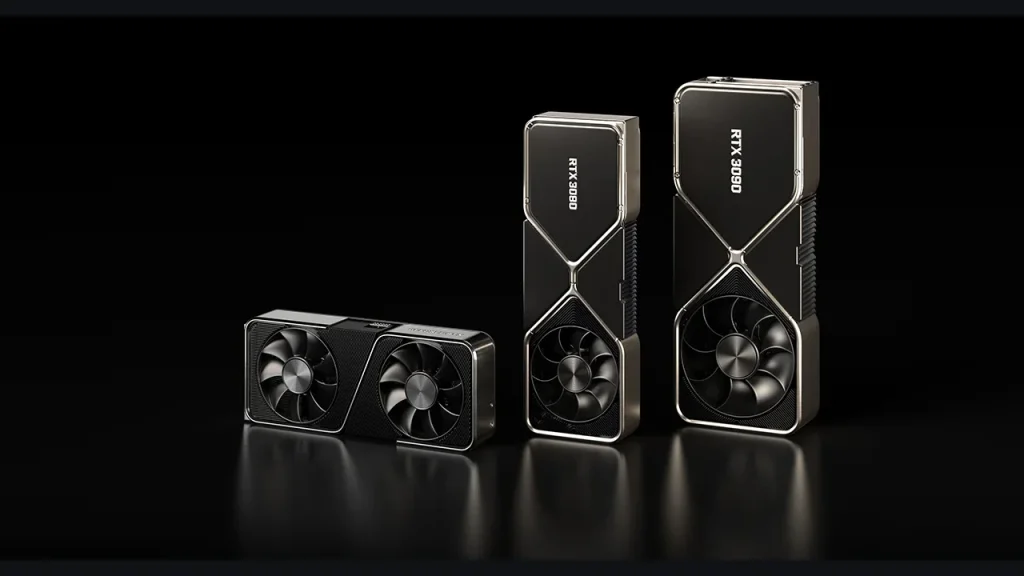
GeForce RTX 3070 Ti DLSS 5 compatibility at a glance
No official DLSS 5 support has been announced for the desktop GeForce RTX 3070 Ti. Its latest confirmed feature set remains DLSS 4.5 Super Resolution and Ray Reconstruction. Anything beyond that is interpretation, so release planning needs to separate NVIDIA’s statements from what the GA104 hardware might theoretically manage.
The table records confirmed support from driver notes and the NGX SDK, while an absent announcement stays unknown rather than becoming a permanent denial.
| DLSS feature | Official support on RTX 3070 Ti | Source | Notes |
|---|---|---|---|
| DLSS Super Resolution (2.x and later) | Yes | NVIDIA driver release notes and game integration history | Baseline neural upscaler |
| DLSS Frame Generation | Yes, with SDK integration | NVIDIA NGX SDK documentation | Requires per-game activation; adds latency |
| DLSS Ray Reconstruction | Yes | NVIDIA NGX SDK documentation | Replaces hand-tuned denoisers in ray traced games |
| DLSS 4.5 Super Resolution and Ray Reconstruction | Yes, current supported limit | NVIDIA release context and SDK packaging | Production target for new integrations on this card |
| DLSS 5 | No official launch support announced | Absence of a published compatibility entry | Future support unknown |
The hardware inside the RTX 3070 Ti
The desktop GeForce RTX 3070 Ti uses the GA104 die from the family documented in the RTX 30 series Wikipedia article. It has second-generation RT cores and third-generation Tensor cores. Its GA104 configuration also carries more SMs and a wider memory bus than the non-Ti RTX 3070, which is why the two cards can behave differently despite sharing a family.
Tensor cores do the neural work. DLSS 1.x ran a convolutional upscaler across a broader hardware range, while every Super Resolution model from 2.x onward is designed for Tensor Core acceleration. Their presence explains the 3070 Ti’s DLSS 4.5 support. NVIDIA hasn’t said whether DLSS 5 needs more Tensor throughput, greater VRAM bandwidth, another model format, or a new instruction set on older cards, so the current matrix cannot answer that question.
Several limits can decide support
A new DLSS generation may change its Tensor Core instruction target, working-memory and VRAM-bandwidth needs, optical-flow dependency, or Frame Generation requirements independently. A card can run DLSS 4.5 and still miss DLSS 5 for any of those reasons. The 3070 Ti might be capable of the model yet blocked by a driver policy, instruction gap, or bandwidth threshold. Public information does not identify which, if any, applies.
Product segmentation is another possible boundary. NVIDIA limited multi frame generation to RTX 50 series hardware rather than RTX 30. That history means silence in a support list does not prove a hardware block.
The DLSS feature ladder
Marketing names and runtime model versions don’t always advance together, so developers should track the actual feature contract.
- DLSS 1.x: the original convolutional upscaler ran on a wide range of NVIDIA hardware, although most current projects skip it.
- DLSS 2.x: the first neural Super Resolution model offered a stable Quality, Balanced, Performance, and Ultra Performance ladder.
- DLSS 3: Frame Generation arrived, using a hardware optical-flow block to place generated frames between rendered frames.
- DLSS 3.5: Ray Reconstruction replaced hand-tuned denoisers in ray-traced games with a neural denoiser.
- DLSS 4 and 4.5: refreshed Super Resolution and Ray Reconstruction models arrived alongside multi frame generation on RTX 50 series cards. Older cards such as the RTX 3070 Ti kept the existing Super Resolution and Ray Reconstruction routes.
The RTX 3070 Ti has been on this ladder since DLSS 2 and remains supported at 4.5. NVIDIA’s research page on DLSS 5 is the reference for the feature, launch timing, and supported cards. At the time covered here, no desktop RTX 30 card, including the 3070 Ti, appears in the launch support set.
Do not turn silence into a verdict
“No official support announced” does not mean “never supported.” Launch lists can expand through later driver enablement, and a release may include a card for one feature but exclude it from another. Hardware that could run a model may also stay outside the list for segmentation reasons.
For now, the accurate wording is that the RTX 3070 Ti isn’t on the published DLSS 5 list, DLSS 4.5 Super Resolution and Ray Reconstruction remain its confirmed limit, and later support is unknown. Studios with fixed dates should build around 4.5 rather than a silent driver update that may not arrive.
At the source cutoff, the public DLSS 5 release remained future-dated and data-gated until NVIDIA’s stated release time. That uncertainty survives launch day: the support list will either include the card or it won’t.
What developers integrate today
Most teams use the NGX SDK instead of writing their own upscaler. The renderer supplies color, depth, and motion vectors, and the SDK returns the reconstructed image. Frame Generation adds calls of its own, while Ray Reconstruction replaces the denoiser in a DXR or Vulkan ray-tracing pipeline. A clean graphics menu is simply the player-facing end of that integration.
Without DLSS 5, the RTX 3070 Ti path must balance internal resolution, ray-tracing cost, and post-processing against the expected gain from DLSS 4.5. A newer card with DLSS 5 could budget for a heavier base render if the new model does more work. Those assumptions affect art direction, asset limits, and QA, so teams normally make the call in pre-production rather than during final bug fixing.
Inputs expected by a typical DLSS renderer path
Exact requirements vary by SDK, but Super Resolution usually expects the following:
- Color buffer: the final low-resolution color image before present-time scaling.
- Depth buffer: the data used to reproject samples across frames and stabilize edges.
- Motion vectors: per-pixel screen-space movement in the SDK’s expected format, including camera and dynamic-object velocity.
- Exposure and tone-mapping state: enough information to identify linear or display-referred operation.
- Jitter offset: the subpixel pattern returned by the SDK for rendering the input.
Ray Reconstruction replaces the denoiser input. Frame Generation adds a back buffer and present-time hook. When a feature misbehaves, check the shipped SDK, the installed NVIDIA driver, and the bundled model files in that order.
How a later DLSS 5 path may fit
If DLSS 5 follows DLSS 3 and 4, NGX will expose a new feature flag and model file through a familiar call shape. The renderer inputs should remain similar, making the change an upgrade rather than a rewrite. That expectation supports integrating DLSS 4.5 now while leaving a clean extension point for a later SDK.
Choose the target by game type
Studios with a large RTX 30 audience must decide whether the renderer follows the newest feature, a middle tier, or the lowest common denominator. Revenue weighting, certification scope, and the cost of carrying parallel paths decide the answer.
Live-service games often favor the broad baseline because a regression on an older GPU costs more than a small performance loss on newer hardware. A high-end single-player showcase has more reason to chase the top tier because visual quality matters to its marketing and Digital Foundry review cycle. The 3070 Ti sits between those priorities: still fast enough to feel current, but no longer at the top of a modern product stack.
The matrix assumes a renderer designed now with DLSS 4.5 as the card’s supported limit. A broader NVIDIA list would let a studio move upward without rebuilding the integration because recent SDK call shapes have stayed stable. A narrower list requires no rework, which makes the conservative target sensible for a dated release.
| Title type | Likely DLSS target | Reason | Risk of betting higher |
|---|---|---|---|
| Live service or multiplayer | DLSS 4.5 Super Resolution | Largest installed base, lowest regression risk | High; lost player trust is expensive |
| Single player AAA showcase | DLSS 4.5 plus Ray Reconstruction | Visual quality is part of the pitch | Medium; recoverable with patches |
| Indie with simple renderer | DLSS 2.x or 3.x Super Resolution | Lower integration cost, broader coverage | Low; SDK upgrade path is well documented |
| Esports or competitive | Often no upscaling, or DLSS 2.x only | Input latency and visual clarity matter more than image quality | Low; competitive scenes rarely chase new neural features |
Practical settings for players
The 3070 Ti still has Tensor cores, supports DLSS 4.5, and handles most current games at 1440p with a sensible quality mode. Whether it is a good 2026 purchase for another three to four years depends on the intended resolution and effects.
It remains competitive for high-refresh 1080p. At high-refresh 1440p with ray tracing, it is adequate rather than exciting. It is no longer the target for ray-traced 4K. DLSS 4.5 still offers a real performance gain in ray-traced games, and the missing DLSS 5 path doesn’t take away the work the card already does well.
Settings that suit a 3070 Ti
- Render resolution: render internally at 1080p and upscale to 1440p with DLSS Quality or Balanced.
- Ray tracing: use medium where available and enable DLSS Ray Reconstruction when supported.
- Frame Generation: enable it with the understanding that it adds latency and cannot replace raw frame rate in competitive play.
- Upscaler preset: use Quality in slower scenes and Performance for fast scenes with heavy fog or particles.
A stable 1080p input gives DLSS 4.5 room to reconstruct a 1440p output. On this card, that route usually produces a cleaner result than naive 1440p with temporal-upscaling artifacts. There is no reason to change those defaults for an unconfirmed feature.
Use measured data, not borrowed FPS figures
The cited material supplies no verified exact-model frame rates for a particular 3070 Ti game, so quoting one would mean guessing or importing data from another GPU. The relationships between features are still useful without false precision.
DLSS 4.5 Super Resolution generally recovers much of the cost associated with a higher internal render resolution on RTX 30 hardware. Ray Reconstruction usually improves stability in heavily ray-traced scenes for a small performance cost. Frame Generation can roughly double perceived frame rate in supported scenes, but latency remains part of the trade. Exact results age quickly across games, scenes, patches, and drivers.
Record enough detail to reproduce a result
- Driver version: save the exact NVIDIA driver and game patch.
- Scene and workload: identify the scene, camera path, and action density.
- Capture method: use an in-game benchmark, frame-time capture, or PresentMon trace rather than a frame-counter screenshot.
- Multiple runs: average at least three runs and report the minimum one-percent low with the average.
- Hardware detail: CPU, RAM speed, storage, and power profile can move a 3070 Ti result by more than ten percent.
An FPS claim without those conditions is closer to promotion than engineering evidence.
When NVIDIA publishes the final compatibility list
If the 3070 Ti appears, adoption should mostly require a driver and SDK update with a small game-side change. If it remains excluded, the card stays on DLSS 4.5 and the current plan still holds.
Studios should watch the SDK and driver rather than marketing language. A working DLSS 4.5 integration already supplies the basic plumbing, so a stable upstream contract makes a new feature another call site instead of a renderer rewrite. Historically, more integration failures have come from bad renderer inputs than from the feature itself.
Claims that often get mixed up
Misconception: the RTX 3070 Ti is the same chip as the RTX 3070, so support must match. Reality: the Ti uses a higher-tier GA104 configuration with more SMs and a wider memory bus. Cards in one silicon family can still land on different support lists.
Misconception: a game-side DLSS 5 option guarantees a later driver for the 3070 Ti. Reality: there is no public evidence of such a retrofit. New DLSS features depend on the SDK and bundled model files as well as the driver, and planning around an assumption can cost a studio a milestone.
Misconception: DLSS 5 replaces the renderer. Reality: DLSS has historically consumed buffers produced by the renderer as a post-process. A new model may change cost or output without reversing that relationship.
Misconception: missing one DLSS feature makes the card obsolete. Reality: the 3070 Ti still runs current games, receives DLSS 4.5, and remains reasonable for 1080p to 1440p gaming in 2026.
Misconception: Frame Generation on a 3070 Ti matches a 50 series card. Reality: the optical-flow hardware is similar in concept but not throughput, and multi frame generation belongs to the 50 series. Similar menu labels do not guarantee the same cost or result.
How the related production topics connect
This compatibility work sits alongside the site’s animation, digital-art, and game-production coverage. The indexed pieces on solid drawing and 3D digital art deal with the upstream work that eventually becomes the frame handed to an upscaler.
Artist intent, subpixel detail, and motion-vector stability all affect reconstruction. DLSS is one stage between asset creation and the displayed frame, not a substitute for the rest of the pipeline.
Actions for different readers
- Player with a 3070 Ti: keep using DLSS 4.5 in supported games and regard later DLSS 5 support as a bonus, not a buying plan.
- Indie developer: integrate DLSS 4.5, leave render-budget room for a later tier, and keep gameplay logic independent of an upscaler mode.
- AAA producer: pin the SDK in the milestone plan, leave DLSS 5 as a stretch goal until the list is public, and budget QA against the lowest common denominator in the matrix.
- Technical artist: watch heavy subpixel detail and unstable motion vectors, since both can hurt reconstruction quality.
Frequently asked questions
Does the GeForce RTX 3070 Ti support DLSS 5 at launch?
No official launch support has been announced. NVIDIA hasn’t published a DLSS 5 list that includes the 3070 Ti, and its latest confirmed set remains DLSS 4.5 Super Resolution and Ray Reconstruction.
What is the latest DLSS feature supported on the RTX 3070 Ti?
DLSS 4.5 is the latest officially supported set, including Super Resolution and Ray Reconstruction. Frame Generation from earlier DLSS 3 releases is also supported when a game integrates it, with the usual latency cost.
Could DLSS 5 be added to the RTX 3070 Ti later through a driver update?
Possibly, but NVIDIA hasn’t confirmed it. Some DLSS capabilities have expanded after launch and others have not. Plan around DLSS 4.5 until the company says otherwise.
Is DLSS 4.5 a meaningful upgrade over DLSS 3 on the RTX 3070 Ti?
It mainly refines the Super Resolution and Ray Reconstruction models instead of adding a new feature category. Image stability is generally better and the newer model uses broader training data, but each scene still needs QA after an SDK update.
Is the RTX 3070 Ti still a good card for current games in 2026?
Yes for 1080p and 1440p with sensible settings and DLSS. It is no longer the right target for 4K ray tracing or the newest neural-rendering tier, but its installed base and useful product life remain real.
Should a developer target DLSS 4.5 or wait for DLSS 5?
Target 4.5 now and leave a clean upgrade point. Recent SDK call shapes have remained stable, so waiting for an unconfirmed feature usually costs more than adding it later.
Does DLSS 5 replace DLSS 4.5 in a project, or do they coexist?
On compatible hardware, a new SDK is expected to expose both and let the game choose the model. A sound integration can retain both paths, which is the pattern major engines are likely to follow.
Where can I verify the official DLSS 5 support list?
Use NVIDIA’s research and driver pages. The DLSS 5 launch and compatibility page is the primary feature reference, while the RTX 30 series Wikipedia article gives neutral family context. Treat other sources as secondary until NVIDIA publishes its own matrix.
What should a player do if a new game ships with DLSS 5 only?
Look for an older DLSS option first. Most projects carrying DLSS 5 also retain DLSS 4.5 or an earlier path. If a game genuinely ships only the new path, the 3070 Ti must use native TAA or the game’s temporal upscaler, with the expected image-quality and performance tradeoffs.
Will the RTX 3070 Ti still get new game integrations in 2026?
Yes. Major engines and middleware continue to ship DLSS 4.5 support, and new PC projects still target this hardware class. Feature compatibility and whether a game runs on the card are separate questions.