
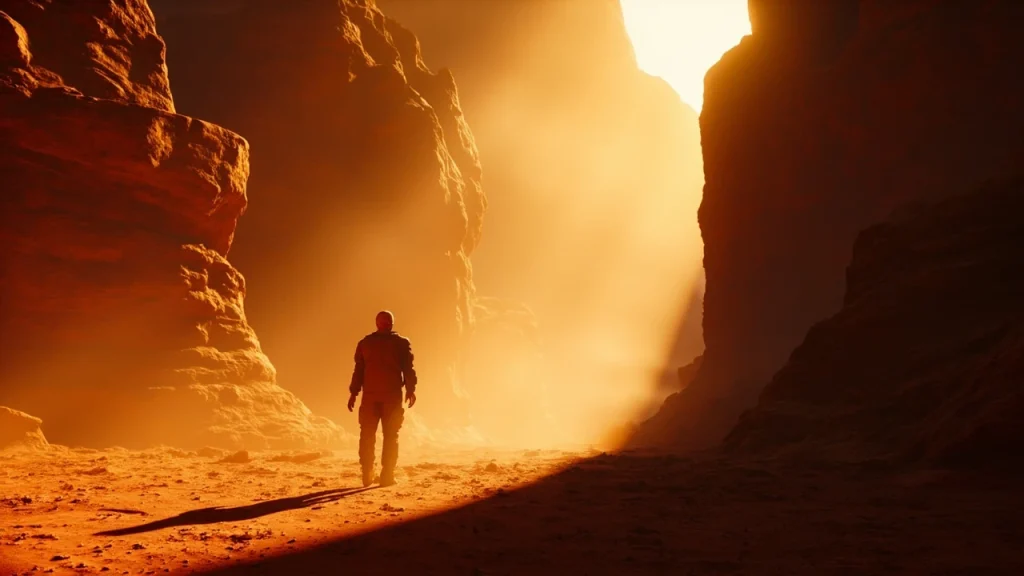
Trace of Shadows in Crimson Desert: how lighting and stealth shape a modern open world
A shadow on a dusty rock ledge is not just a pretty rendering artifact. In an open world built around large-scale skirmishes, horseback traversal, and stealth takedowns, the way a game engine renders cast shadow, ambient occlusion, and indirect light directly determines whether the player can read a scene at a glance. Pearl Abyss’ Crimson Desert leans on that “trace of shadows” idea as a core readability signal, and it is one of the more interesting case studies in current open-world design because it tries to balance three often-competing goals: cinematic presentation, tactical clarity, and consistent stealth feedback across very different lighting conditions.
This article treats the trace of shadows crimson desert presents not as a marketing line, but as a developer-facing design problem. We will look at the rendering work behind cast shadow behavior, the gameplay systems that consume light information, and the trade-offs a studio makes when it ships a single-player action game across console and PC. The goal is to give designers, technical artists, and interested players a shared vocabulary for evaluating what a shadow is doing on screen and why it sometimes feels like the game is fighting the camera.
Throughout the analysis, two recurring questions will guide the discussion. First, does the lighting pipeline serve the moment-to-moment gameplay loop, or does it occasionally obscure it for the sake of spectacle? Second, when the engine reports “in shadow” to the gameplay layer, does that match what the player sees? Both questions sit at the heart of the trace of shadows crimson desert presents, and they shape how players plan encounters, traverse the world, and ultimately judge the game’s combat feel.
What “trace of shadows” means in an action RPG context
The phrase “trace of shadows” is shorthand for several distinct systems working together. At a rendering level it covers the cast shadow projected by characters, props, and terrain features, plus screen-space ambient occlusion and contact shadowing that ground objects against the environment. At a gameplay level it covers the queries the game uses to decide whether a character is “in shadow,” “in cover,” or “exposed” to enemies, and how those queries feed stealth detection meters, AI perception cones, and difficulty tuning. At a level design level it covers the placement of occluders, light sources, and time-of-day systems that produce readable dark zones in the first place.
Crimson Desert sits in a genre where each of these layers has to be honest. The game is built around third-person melee combat with mounted sections, ranged archery, and stealth assassinations, and it spans a huge open world that ranges from bright coastal cliffs to dim interior crypts. The trace of shadows crimson desert relies on therefore has to be visually believable when the camera is far away during traversal and behaviorally correct when the camera is close during a duel. Those two camera distances pull the rendering and gameplay layers in opposite directions, and most of the design tension in the title comes from resolving that pull.
For developers, the practical lesson is that lighting is not a final pass. It is a feedback channel for combat, navigation, and AI. The trace of shadows a player can see is the visible surface of a much deeper contract between renderer, gameplay, and level design. When that contract is clear, the game feels responsive. When it is loose, the player starts to feel like the camera is lying.
The rendering pipeline that produces the trace of shadows
Cast shadow and cascaded shadow maps
Large open worlds almost always rely on cascaded shadow maps to keep character and creature shadows readable at distance. Crimson Desert appears to follow that convention, with a sun-driven directional shadow pipeline that splits the view frustum into depth bands and reallocates shadow resolution based on the player’s position. The practical result is that close-range characters get tight, well-defined silhouettes while distant terrain gets cheaper, lower-resolution shadows that still imply direction and time of day.
The interesting question is how aggressively the engine updates those cascades. A high update rate gives accurate cast shadow positions during fast horseback traversal but burns frame budget. A low rate saves performance but lets shadows lag behind moving characters, which can confuse the player about where the sun is or whether a character is actually under a tree. The trace of shadows crimson desert produces during a gallop is therefore partly a tuning decision about cascade update frequency, not just a visual one.
Screen-space ambient occlusion and contact shadowing
Cast shadows are only one ingredient. Screen-space ambient occlusion (SSAO) and its more modern descendants (HBAO+, GTAO, or vendor-specific variants) darken creases, contact points, and the gaps between characters and ground. In Crimson Desert these are particularly important because the art direction uses warm sun raking across textured stone, leather, and cloth. Without SSAO, every contact point looks like it is floating. With it, characters feel planted, and the trace of shadows underfoot helps the player judge the ground plane during combat dodges.
Contact shadowing, whether implemented as a screen-space technique or as baked decals under major set pieces, serves a similar role. It is the dark sliver under a chin, the smear under a kneeling character, the soft halo around a heavy weapon resting on rock. These micro-shadows are what make the trace of shadows crimson desert relies on feel grounded rather than theatrical.
Indirect light, bounced sun, and ambient color
A trace of shadows does not exist in isolation. The lit side of a character receives direct sun, the dark side receives skylight, and surfaces receive bounced light from nearby terrain. Crimson Desert’s arid palette means a lot of bounced light is warm, which keeps shadowed regions from going pitch black even at noon. That matters for both readability and art direction: a fully black shadow on a red rock wall reads as a hole rather than a shadow, while a slightly warm, slightly desaturated shadow reads as depth.
For developers, the lesson is that ambient color and indirect light are part of the shadow system, not separate from it. Tuning the trace of shadows crimson desert presents without tuning ambient is how a game ends up with characters that look like cardboard cutouts pasted onto a beautiful environment.
How the gameplay layer consumes the lighting layer
Detection queries and “is this character in shadow?”
Stealth games typically expose a boolean or a value to gameplay: is the target in a lit zone, and by how much? The trace of shadows crimson desert produces on screen is the player’s intuitive version of that query, but the engine’s version may be computed from a simplified lighting volume, a baked occlusion map, or a real-time light probe. When those two versions disagree, players describe the game as “unfair” even when the underlying systems are internally consistent.
Common sources of mismatch include a cast shadow that is visible on screen but not registered by the gameplay volume because the volume does not include the dynamic light source, and a gameplay “in shadow” flag that is true even though the character is clearly lit by a bounced highlight. The first feels like the AI has wallhacks. The second feels like the player is being punished for a shadow the game itself is hiding. Both are lighting contract failures.
AI perception and shadow-aware behavior
Enemy AI in Crimson Desert reacts to light in several ways. Patrol routes bend around well-lit areas. Alert states change faster when a player is exposed. Some creatures appear more aggressive in darker zones, mirroring the player’s own stealth advantage. None of this is unusual for the genre, but the trace of shadows crimson desert places in the world determines whether the AI’s behavior is readable. A patrol that inexplicably avoids a brightly lit square feels like a bug. A patrol that avoids a clearly shadowed alley feels like stealth design.
That readability depends on the lighting layer being stable and consistent. If cast shadow positions flicker, the AI’s notion of “in cover” can change several times per second, producing the classic bug where an enemy starts and stops an investigation alert. A stable shadow pipeline is therefore a stability feature for AI, not just a visual one.
Player feedback: meters, vignettes, and eye adaptation
The game also has to tell the player how visible they are. Eye adaptation, stealth meters, and screen vignettes all feed back the same information: how visible am I right now? The trace of shadows crimson desert draws on screen needs to agree with that feedback. If the vignette says “exposed” while the character is clearly standing in deep shadow, the player learns to ignore the vignette, and the feedback system has effectively died.
Designers can mitigate this by aligning the gameplay lighting volume with the visible shadow regions, by adding small visual cues (a subtle rim light when exposed, a darker character tint when hidden), and by making sure eye adaptation does not crush the contrast that the player needs to read the scene. Each of these is a tuning lever, and each one interacts with the others.
Player intent: how to use shadow and light deliberately
For players approaching the game as an action RPG rather than a pure stealth title, the trace of shadows crimson desert lays down can be used as a tactical tool. Below is a practical mental model that translates the rendering discussion into in-game behavior.
- Watch the long shadow, not the ground at your feet. During traversal, the cast shadow projected onto nearby terrain tells you the sun direction and roughly the time of day. Use that to predict where shadowed zones will appear as you ride.
- Trust pockets, not zones. Large shadowed areas can be unreliable for stealth if they sit under a dynamic light or in a transition zone between SSAO and full lit. Tight pockets between two occluders are usually more reliable than a single big shadow.
- Treat cover and shadow as different things. A low wall can be in full sun but still block line of sight. A deep shadow on open ground provides concealment but not cover. The game’s AI and detection systems usually care about both, and the trace of shadows alone does not tell the full story.
- Use eye adaptation as a clue. When you step from a bright exterior into a dim interior, the world will look darker than the engine actually models it for a moment. The game often shortens that window deliberately, so treat the first second indoors as a low-readability beat and pause before engaging.
- Read rim lighting on enemies. A clearly lit enemy silhouette is much easier to track during a multi-target fight. If the trace of shadows crimson desert produces is hiding enemy silhouettes, reposition to bring them against a brighter backdrop rather than relying on the same camera angle.
None of this is a guarantee. It is a framework for noticing what the lighting pipeline is doing and adjusting to it, which is the same work a technical artist does when tuning the systems in the first place.
Stealth build decisions that interact with the lighting layer
Player builds in Crimson Desert can amplify or reduce the mismatch between visible shadow and gameplay shadow. Choosing gear and skills that align with how the engine actually computes detection tends to feel more reliable than builds that fight the lighting system.
| Build lever | Visible effect on the trace of shadows | Effect on detection system | Risk of mismatch |
|---|---|---|---|
| Darker clothing or cloth colors | Character silhouette blends into shadowed areas | No direct change unless the detection system uses material albedo | Low. Visual only, but useful in practice because players misread their own visibility |
| Skills that reduce detection radius | No visible change | Detection AI checks against a smaller radius around the player | Medium. Player may think they are safe in shallow shadow when the skill is doing the real work |
| Skills that increase enemy perception | No visible change | Detection radius and alertness sensitivity both rise | High. Player may believe the trace of shadows is failing when the system is working as designed |
| Mounted combat vs on foot | Mount casts a much larger shadow, which can either help or hurt concealment | Detection often changes with mounted state | Medium. The big mount shadow can break stealth even when the rider is technically hidden |
| Time-of-day manipulation | Global ambient and shadow length both shift | Some encounters tune difficulty by time of day | Low to medium. Useful when the player has agency, confusing when they do not |
The broader point is that the trace of shadows crimson desert renders is one channel of feedback among many, and the player who understands which channel is doing the work in a given moment tends to feel more in control. The player who assumes the visible shadow is the only thing that matters tends to feel that stealth is inconsistent.
Where the trace of shadows breaks down
No open-world renderer gets the lighting contract right in every scene. The common failure modes are worth naming explicitly because they recur across the genre.
Distance compression during traversal
At long sight lines, distant characters and creatures resolve into a few pixels. The cast shadow can dominate the silhouette, which is usually fine for readability but can make a group of distant riders look like a smudge. The trace of shadows crimson desert draws at that distance is doing most of the visual work, and the SSAO and indirect layers contribute less. When a distant encounter matters, the game often telegraphs it with a cutscene or a hand-placed vignette rather than relying on the rendering alone.
Transitions between interior and exterior
Doorways and cave mouths are classic weak points. The lighting volume on one side may be a baked interior probe, while the other side is the live exterior lighting system. The trace of shadows crimson desert renders across that boundary is usually a compromise: a soft penumbra where the systems meet, and a slightly mismatched ambient color for a frame or two. The game mitigates this with doorway fog and short loading-style fades, but the transition is always visible to a careful eye.
Multi-light combat arenas
Large arena fights with torches, braziers, and dynamic spell effects challenge any shadow pipeline. The cast shadow from a fire pit and the cast shadow from the sun both want to project onto the ground, and the gameplay layer has to decide which one is “real” for detection purposes. The trace of shadows crimson desert renders in those arenas is often a layered composite, and the game typically resolves the gameplay question with a simpler rule, such as “firelight overrides sunlight for detection.” That rule is invisible to the player until it produces a result that contradicts the visible shadow, which is a normal genre tradeoff rather than a bug.
Weather and dust effects
Wind, dust, and sand haze all scatter light and reduce shadow contrast. In Crimson Desert this is part of the art direction. The trace of shadows crimson desert produces during a dust event is intentionally softer, and the gameplay usually treats it as a global reduction in detection rather than a per-pixel change. That is a sensible compromise but it does mean that a player who times a stealth approach to a dust storm is relying on a global rule, not on the specific shadow geometry of the moment.
Cross-platform considerations for the trace of shadows
Open-world action RPGs ship on console and PC, and the trace of shadows crimson desert renders is one of the more visible places where cross-platform tuning shows. The two platforms differ in screen size, typical viewing distance, HDR capability, and how aggressively frame pacing is locked.
| Platform factor | Effect on the trace of shadows | Common tuning response |
|---|---|---|
| Console HDR and tone mapping | Highlights are compressed, shadow regions can be slightly lifted to preserve detail | Lift ambient color in shadow zones to keep character detail readable without crushing blacks |
| PC SDR reference monitors | Greater contrast between sunlit and shadowed regions, deeper blacks | Provide a separate ambient lift value, or rely on user-side calibration |
| Console frame pacing at 30 or 40 fps | Cast shadow updates look slightly softer because cascade updates are spaced further apart in time | Tune cascade update rate to match the target frame budget rather than assuming 60 fps |
| PC variable resolution and DLSS/FSR | Shadow edges can shimmer or crawl when the internal resolution dips | Stabilize shadow bias and use TAA-friendly filtering on shadow edges |
| Console vs PC LOD distance | Distant shadow detail is reduced more aggressively on console | Match gameplay consequences to LOD, not to raw shadow quality, so a distant enemy behaves the same on both |
Each row is a place where a developer can either lean on the hardware or compensate in software. The trace of shadows crimson desert ships with is the visible result of those choices, and the way it is described in a 2026 review of Crimson Desert’s mostly positive reception reflects the platform the reviewer was playing on. Reading multiple platform impressions is therefore useful when evaluating the lighting system, because the same game can feel “too dark” on one configuration and “perfectly lit” on another.
Production-level takeaways for developers building similar systems
For a studio shipping a comparable open-world action RPG, the trace of shadows question is really a question about how tightly the rendering, gameplay, and level design layers are coupled. The lessons below come up repeatedly in postmortems of similar titles.
- Treat lighting as a gameplay dependency. If the AI or stealth system depends on a boolean that the renderer can change at any time, the system is fragile. Freeze critical lighting decisions in a way that the gameplay layer can rely on.
- Pick one source of truth for “in shadow.” If cast shadow, SSAO, and baked occlusion all have a say, the player will eventually find a case where they disagree. Decide which one wins for detection and keep the others as visual sugar only.
- Design encounters around the shadow you can actually render. A beautiful stealth arena that requires the renderer to compute perfect dynamic occlusion at 60 fps will eventually be cut. Design the encounter to be solvable in the lighting the engine can produce, not in the lighting the concept art imagined.
- Test on the smallest target hardware early. Lighting bugs that never appear on a high-end PC show up immediately on a base console. The trace of shadows crimson desert ships with was tuned on the platform that has to run it, and that is the right order of operations.
- Provide a debug view for designers. A heatmap of where the detection system believes the player is exposed, overlaid on the actual cast shadow, will find more bugs in a week than months of playtesting.
- Document the lighting contract. A short page that says “this is how we decide in shadow, this is how we tell the player, this is what the AI is allowed to assume” is more valuable than another lighting preset.
These are the same decisions Pearl Abyss appears to have made, with results that the wider press has found mostly successful even where individual mechanics draw criticism. The trace of shadows crimson desert offers is one of the more thoughtful implementations in the current generation, and it is worth studying precisely because the rest of the genre is still working through the same trade-offs.
How the trace of shadows compares to peers in the genre
Comparing Crimson Desert to other recent open-world action RPGs is useful because the lighting contract is one of the few systems that tends to be discussed publicly, even when reviewers do not use the term.
| Reference point | Lighting style | Detection feedback style | Trace of shadows strength |
|---|---|---|---|
| Crimson Desert | Warm arid palette, strong sun, layered ambient | Detection meter, vignette, eye adaptation | Strong cinematic integration, occasional distance compression |
| Modern medieval-style action RPGs | Cooler overcast, fog-driven | Often a separate “detected” UI state with a strong color signal | Readability driven by fog, not by cast shadow |
| Urban open-world action games | Heavy use of artificial light, neon, mixed color temperature | Wanted level, on-screen indicator | Cast shadow often secondary to silhouette and color |
| Pure stealth titles | Engineered high-contrast interiors | Wholly dedicated light/shadow meter | Trace of shadows is the central mechanic, not a feedback channel |
The takeaway is that Crimson Desert sits between cinematic and tactical. The trace of shadows it produces is closer in feel to an action RPG than to a dedicated stealth game, which is a fair match for its design goals. Players looking for the precision of a pure stealth title will not find it here, and that is a design choice rather than a technical failure.
Frequently asked questions
What does “trace of shadows” mean in Crimson Desert?
It refers to the combined visual signal the game produces through cast shadow, ambient occlusion, and indirect light. It is the surface expression of a deeper contract between the renderer, the detection system, and the AI. Players experience it as the dark areas that tell them where to hide and the lit areas that warn them they are exposed, while developers experience it as a stack of rendering passes feeding gameplay queries.
Is Crimson Desert a stealth game or an action RPG?
Crimson Desert is primarily an action RPG with stealth as one of several tools. The trace of shadows the game renders supports stealth encounters but does not define the genre, and the combat system expects players to mix stealth, melee, archery, and mounted combat. Treating it as a pure stealth game will lead to frustration; treating stealth as one option among many tends to be more rewarding.
How does the lighting affect the detection meter?
The detection meter is driven by the gameplay lighting volume, which is a simplified version of the rendered scene. When the two agree, the meter and the visible trace of shadows feel consistent. When they disagree, the meter can change without a visible reason or stay flat while the on-screen situation is obviously changing. Both cases are usually tuning issues rather than outright bugs, and patches tend to tighten the gap over time.
Why do distant enemies look like smudges on horseback?
At long sight lines the cast shadow dominates the silhouette and SSAO contributes very little. The trace of shadows crimson desert renders at that distance is doing most of the visual work, and the small number of pixels for the character itself becomes secondary. The game handles this by using cutscenes, music stings, and HUD elements to telegraph important distant encounters rather than relying on raw rendering.
Does time of day matter for stealth in Crimson Desert?
Yes, but the effect is global rather than per-pixel. Night and dust events reduce the contrast of the trace of shadows the game produces and lower detection in a generalized way, while bright daylight does the opposite. Time of day is therefore a useful planning tool for stealth approaches, and it is one of the more reliable signals the game gives the player.
How does the game handle interior to exterior lighting transitions?
The transition is one of the weaker points in the pipeline. The trace of shadows across a doorway is a soft penumbra rather than a hard line, and the ambient color can shift for a frame or two as the lighting volumes crossfade. The game mitigates this with short fades and doorway fog, but players who watch for it will see the seam.
Is the trace of shadows the same on console and PC?
The visual style is consistent, but the precise behavior of cast shadow, ambient occlusion, and eye adaptation differs because of frame rate, resolution, and tone mapping. Reviews on different platforms can describe the same scene in different terms, and that is part of why the lighting contract is so hard to tune for a multi-platform launch.
Can players use the trace of shadows tactically without stealth skills?
Yes. The visible trace of shadows is useful even when the gameplay detection system would still catch the player, because it tells the player where the AI is most likely to have weak sight lines. Combining that knowledge with skills that reduce detection radius, or with mounted approaches that change the AI’s behavior, is a more reliable strategy than relying on shadow alone.
What is the most common reason a stealth attempt feels “unfair” in Crimson Desert?
Most unfair-feeling moments come from a mismatch between the visible trace of shadows and the gameplay lighting volume. A cast shadow that looks deep but does not register as cover, or a brightly lit area that the gameplay treats as dark, both feel like the game is cheating. Updates to the game over time tend to narrow these cases, but the structural tension between rendering and gameplay is inherent to the genre.
Where can I read more about the technical design of Crimson Desert?
For a player-facing critical view, recent reviews such as the 2026 Press Start review of Crimson Desert cover the overall impression. For background on the game’s development and design history, the English Wikipedia article on Crimson Desert is a reasonable starting point. For hands-on technical detail, official developer interviews and postmortems are the most useful sources, although they tend to be published sporadically around major patches and platform updates.