
Why Brookhaven Roblox Is the Ultimate Case Study for Developers
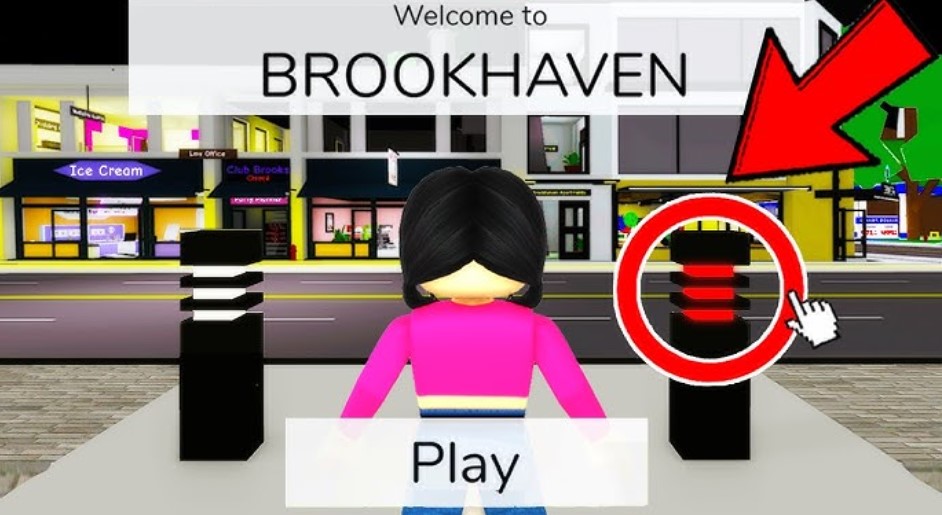
You know what? Honestly, if you asked me five years ago what the “perfect” video game looked like, I would have described something with high-definition graphics, a complex leveling system, and a narrative that rivals Hollywood movies. I would have been dead wrong. The real answer – the one that keeps over 500,000 players glued to their screens at any given moment is Brookhaven Roblox. It’s not just a game; it’s a cultural phenomenon that has completely flipped the script on what we think players want. At ManillaGames, we’ve spent countless hours tearing this game apart (figuratively, of course) to understand how a solo developer, Wolfpaq, built an empire that runs on mobile phones and potato PCs alike.
For you, the aspiring developer or artist, Brookhaven isn’t just a roleplay hangout. It’s a masterclass in minimalism, technical optimization, and social engineering.
So, here’s how it works. We’re going to break down exactly why this game succeeds where “better” looking games fail, and how you can apply these lessons to your own projects. No fluff, just the raw data and design philosophy that powers the giant.
The “Un-Game” Philosophy: Why Less is More
Here’s the thing about Brookhaven Roblox: it barely qualifies as a “game” in the traditional sense. There is no currency to grind (unlike Bloxburg), no pets to level up (unlike Adopt Me!), and no “win” state. And that’s exactly why it works.
Wolfpaq understood something profound about the Roblox demographic. Players don’t always want a second job. They don’t want to stress about earning enough virtual cash to buy a couch. They just want the couch. By removing the friction – the “grind”- Brookhaven became the ultimate digital dollhouse.
Key “Wolfpaq” Design Principles:
- Instant Gratification: A player can spawn a mansion, a luxury car, and a helicopter within 10 seconds of joining. No waiting, no paywalls for basic fun.
- Zero Barrier to Entry: The UI is incredibly simple. A five-year-old can navigate it.
- Player-Driven Narrative: The game provides the stage (the city), but the players provide the script. This creates infinite replayability because every server feels different.
For a developer, this is a risky move. We are taught to build “loops”-action, reward, upgrade. Brookhaven deletes the loop. It says, “Here are the keys, have fun.” This suggests that sometimes, your mechanics are just getting in the way of the player’s imagination.
Technical Mastery: Optimization That Runs on Anything
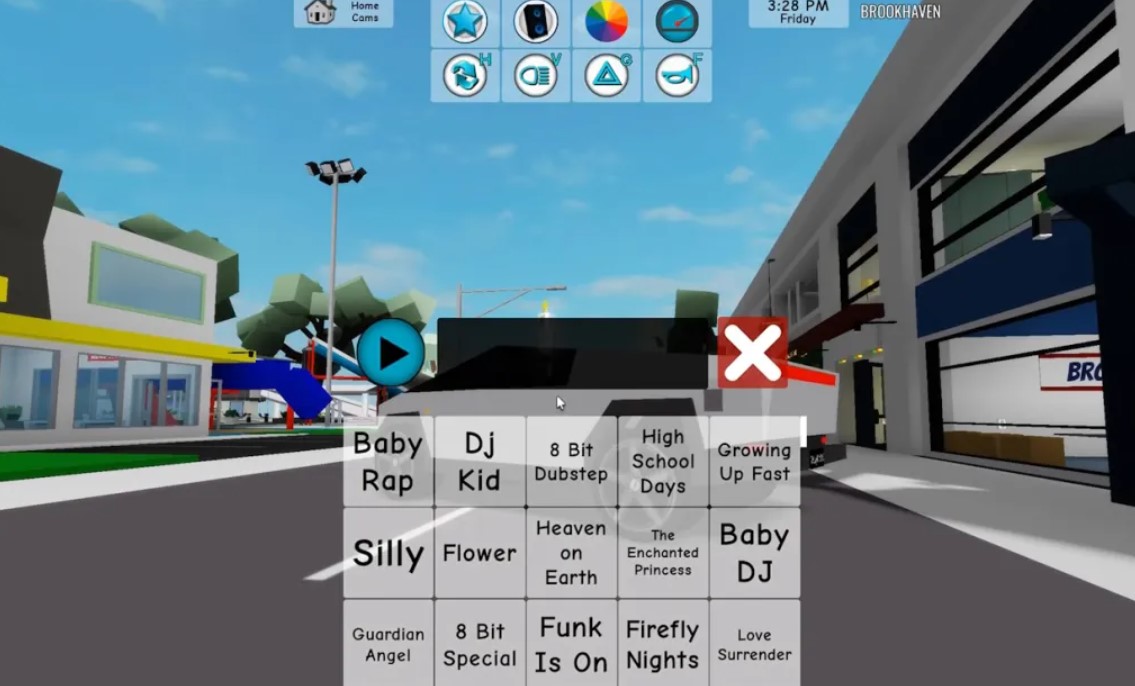
Let me explain why this matters. You can build the most beautiful world in Roblox Studio, but if it crashes on an iPad Mini, nobody will play it. Brookhaven is the gold standard for mobile optimization.
The map is surprisingly small compared to other RPGs like Livetopia. This isn’t laziness; it’s genius. A smaller map means fewer assets to load, less memory usage, and – crucially – a higher density of players. You are constantly bumping into other people, which forces social interaction.
We looked at how the game handles collisions and meshes. Wolfpaq used a technique that many beginners overlook: Box Collision Fidelity.
When you import a complex mesh into Roblox (like a car or a statue), the engine tries to calculate a complex “hitbox” for it. This eats up processing power. Brookhaven uses simple box collisions for almost everything that doesn’t strictly need detailed physics. The lighting is also baked and simple – no heavy dynamic shadows where they aren’t needed.
Optimization Checklist for Roblox Devs
| Optimization Technique | Why It Matters for Mobile | How Brookhaven Uses It |
| Box Collision Fidelity | drastically reduces physics calculations per frame. | Used on buildings, props, and static meshes. |
| Anchored Parts | Unanchored parts require constant physics updates. | Almost the entire map is anchored to static geometry. |
| Simple Lighting | “Future” lighting kills mobile batteries. | Uses “ShadowMap” or simpler tech to ensure 60FPS on older phones. |
| Texture Atlas | Reduces draw calls by combining textures. | Many props share materials to lower rendering load. |
If you are building a game, ask yourself: Does this chair need a 4k texture? Probably not.
Monetization: The “Voldex” Era and The Premium Model
So here’s what happened recently. In early 2025, the studio Voldex acquired Brookhaven. This was huge news. Wolfpaq retired to focus on his family (a well-deserved break), and a larger team took over. But the monetization strategy remains a fascinating case study. Most Roblox games are aggressive. They pop up windows asking you to buy currency every five minutes. Brookhaven is subtle.
The “Premium” gamepass is the core revenue driver. It’s a one-time purchase (mostly) or a clear upgrade that offers tangible, permanent value-like access to the “star” houses or special vehicles.
Why this works:
- Volume over Whales: Instead of trying to get one player to spend $1000, Brookhaven tries to get 10 million players to spend $5.
- Social Proof: When you see someone driving the “Premium” car or living in the mansion with the pool, you want it. The players advertise the gamepasses to each other just by playing.
- Respect: It feels honest. The game is fully playable for free. You don’t feel crippled without paying; you just feel “standard.”
For us at ManillaGames, this is the ethical way to monetize. It builds trust. And trust retains players for years, not just weeks.
Map Design of Brookhaven Roblox: The “Main Street” Effect
Have you ever noticed how Brookhaven spawns everyone in the same spot? The fountain, the police station, the hospital-it’s all crammed into one central block. This is intentional. In game design, we call this a “hub.” By forcing players to spawn and hang out in a tight area, the game feels alive. If the map were four times bigger, players would be spread too thin, and the server would feel empty even if it was full.
Key takeaway: Don’t build a massive open world just because you can. Build a world small enough to feel busy.
The Secret Sauce: Lore and “The Agency”
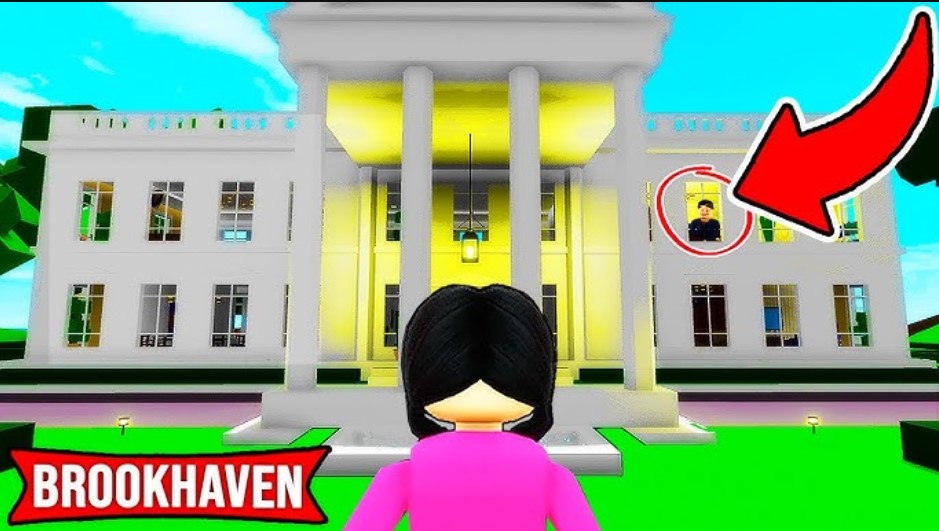
Here is where it gets weird – and awesome. For a game with no story, Brookhaven has a surprisingly deep “lore.” There are hidden rooms, secret buttons, and a mysterious organization called “The Agency.” There’s the character “Mr. Brookhaven” and hints of a darker backstory involving the abandoned hospital or the bank vault.
Why add this? It gives the “explorers” something to do. While the roleplayers are playing house, the curious players are hunting for ghosts. It generates YouTube content. Channels like Darzeth make endless videos hunting these secrets.
Top “Lore” Elements That Drive Retention:
- The Secret Agency Base: Hidden under the map/cleaners, requiring specific codes to enter.
- The Abandoned Hospital: Spooky atmosphere that contrasts with the bright city.
- Mr. Brookhaven’s House: Hidden messages and a backstory of the town’s founder.
This is free marketing. Every time you add a secret, a YouTuber makes a video about it, and thousands of kids log in to find it themselves.
Comparing the Giants
It helps to see where Brookhaven sits in the ecosystem. Let’s look at how it compares to its main rival, Welcome to Bloxburg.
Brookhaven vs. Bloxburg for Developers
| Feature | Brookhaven RP | Welcome to Bloxburg | Developer Lesson |
| Entry Cost | Free | 25 Robux (Paid Access) | Free access maximizes initial traffic (User Acquisition). |
| Building | Premade houses (spawn and go) | Fully custom block-by-block building | Premade assets lower the “time to fun” metric. |
| Job System | Roleplay only (no actual salary needed) | Working is required to earn money | Removing the “grind” attracts casual social players. |
| Art Style | Simple, blocky, standard Roblox | Detailed, realistic textures | Simple art styles age better and perform better. |
What You Can Build Today Like Brookhaven Roblox?
So, what does this mean for you? You don’t need a team of 50 people to make a hit. Wolfpaq built the core of this game alone. He focused on systems rather than content. He built a house-spawning system, a vehicle system, and a prop placement system. Then he let the players generate the content (the stories).
If you are prototyping your next game, try this:
- Cut the fat. Remove one mechanic that slows the player down.
- Optimize early. Use the “Show Decomposition Geometry” tool in Roblox Studio to see your collision meshes. Keep them simple.
- Encourage chaos. Give players tools to interact with each other, not just with NPCs.
FAQ
Is Brookhaven Roblox scripted in Lua?
Yes, like all Roblox games, it uses Luau (Roblox’s version of Lua). The code focuses heavily on client-side replication to keep movement smooth.
How did Wolfpaq optimize the game for mobile?
He used low-poly meshes, simple textures, and aggressive “StreamingEnabled” settings to only load parts of the map near the player.
Can I make a game like Brookhaven Roblox alone?
Absolutely. The core mechanics (spawning a house model, sitting in chairs, morphing avatars) are intermediate-level scripting tasks. The challenge is scale and polish.
What is the “Agency” in Brookhaven?
It’s a fictional secret organization added by the developer to create mystery. It has a hidden bunker and connects to the “criminal” roleplay archetype.
How does the house system work technically?
It likely uses a serialization system. When you “claim” a plot, the server moves a pre-built model from ServerStorage to the Workspace at that specific CFrame location.
Why did Voldex buy Brookhaven?
Because it has 120 million monthly active users. It’s a stable, massive platform for virtual goods. It’s essentially buying a social network, not just a game.
Is the map really that small?
Yes. Compared to open-world games like Mad City, it’s tiny. But this density is what makes the roleplay work.
Final Thoughts
Look, we love complex code and high-end shaders as much as anyone. But Brookhaven Roblox teaches us that empathy is the most important developer skill. Wolfpaq empathized with the kid on an old Android tablet who just wanted to play “family” without grinding for 10 hours. He built a toy box, not a Skinner box. If you can find that kind of clarity in your own design-if you can strip away the ego and build exactly what the player needs-you might just build the next 70-billion-visit giant.
Hey, thanks for reading! If this breakdown helped you understand game design a little better, support our team by sharing this post online across social media and adding this content to your bookmarks. You can also write to the ManilaGames team directly if you seek creative or commercial collaboration. We are always looking for fresh talent and new partners. Let’s build something cool.