
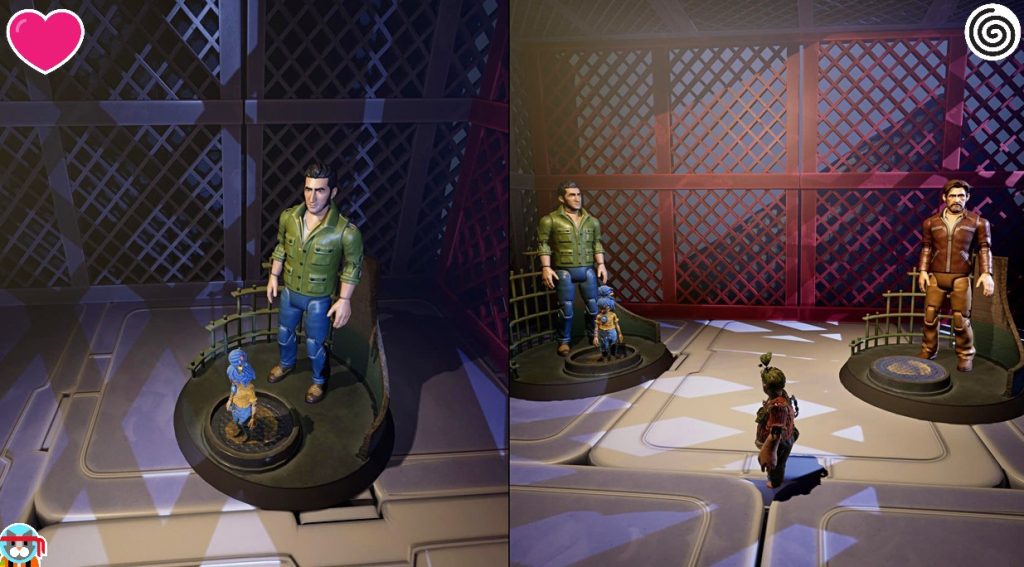
It Takes Two Chapters: Which Ones Are Actually the Hardest?
Okay, let’s be real for a second. If you’ve played this game with a partner, you’ve probably had at least one argument. Maybe it was about timing a jump, or maybe it was about who messed up the boss fight again. It happens. That’s the beauty – and the pain – of Hazelight’s masterpiece. When you look at the full list of It Takes Two chapters, it seems pretty straightforward on paper, but it is not like that.
You start in a shed, you go to a tree, you mess around in a bedroom. Simple, right? But the difficulty curve in this game is weird. It’s not a straight line up. It spikes. Randomly. One minute, you are riding a spider, having a blast, and the next, you are stuck on a platforming section that feels like it belongs in a hardcore speed run.
I’ve played through this game a few times now – once with my best friend, once with my partner – and honestly, the hardest parts aren’t always the big boss fights. Sometimes, it’s just the janky physics or that one puzzle that makes zero sense until you accidentally solve it.
Let’s break down the It Takes Two chapters to figure out where the real nightmares live.
The Shed: A Deceptive Start
The first chapter is The Shed. Most people breeze through this. It’s the tutorial, basically. You learn how to dash, how to jump, and you get introduced to Dr. Hakim (who is still the most annoying book in existence, by the way).
But don’t let The Shed fool you. It’s not hard, strictly speaking, but it sets a precedent. You have to communicate. If you don’t talk, you die. The boss fight with the Vacuum Tower is the first “check” on your relationship. You have to suck up the explosive canisters and shoot them back. If your timing is off, you just keep taking damage.
Is it the hardest of the It Takes Two chapters? No. But it’s the one where you realize this game isn’t just “press X to win.” You actually have to pay attention.
The Tree: Where Things Get Sticky… Literally
Alright, this is where the difficulty actually kicks in. The Tree chapter is where a lot of people quit for the night. Why? Because of the wasps.
The Wasp Queen boss fight is a huge spike in difficulty compared to the vacuum. One player has a flammable gel gun, and the other has a matchstick rifle. You have to coat the enemies in gel and then blow them up. It sounds cool, and it is, but aiming that gel gun while dodging sliding attacks? It’s stressful:
- The Mortar Wasp: This thing launches slow-moving red projectiles that track you.
- The Shield Wasp: You have to hit them from behind or coordinate perfectly to stun them.
- The Larva swarms: They just drop from the ceiling and mess up your day.
Plus, the platforming here is vertical. If you fall, you lose progress. It’s not just about fighting; it’s about not slipping off a branch because the camera angle got weird.
Rose’s Room: The Longest Haul
Rose’s Room feels like it goes on forever. Seriously, it’s huge. It’s definitely the longest of the It Takes Two chapters, and it changes co-op genre mechanics like five times. You go from a dungeon crawler to a space battle to a rhythm game.
The dungeon crawler section – where Cody is a mage, and May is a warrior – is usually fun, but the boss fight against the King and Queen requires some great button-mashing skills. If you aren’t good at hack-and-slash games, you might struggle here.
But the real “hard” part of Rose’s Room isn’t the gameplay. It’s the Elephant scene.
I’m not gonna spoil it too much if you haven’t seen it, but man, that scene is brutal. It’s emotionally hard. You are actively doing something terrible to a cute character, and the game forces you to do it. It’s awkward. It makes you feel bad. Difficulty isn’t always about reflexes; sometimes it’s about getting through a scene without feeling like a monster.
The Clock: Time Is Not on Your Side
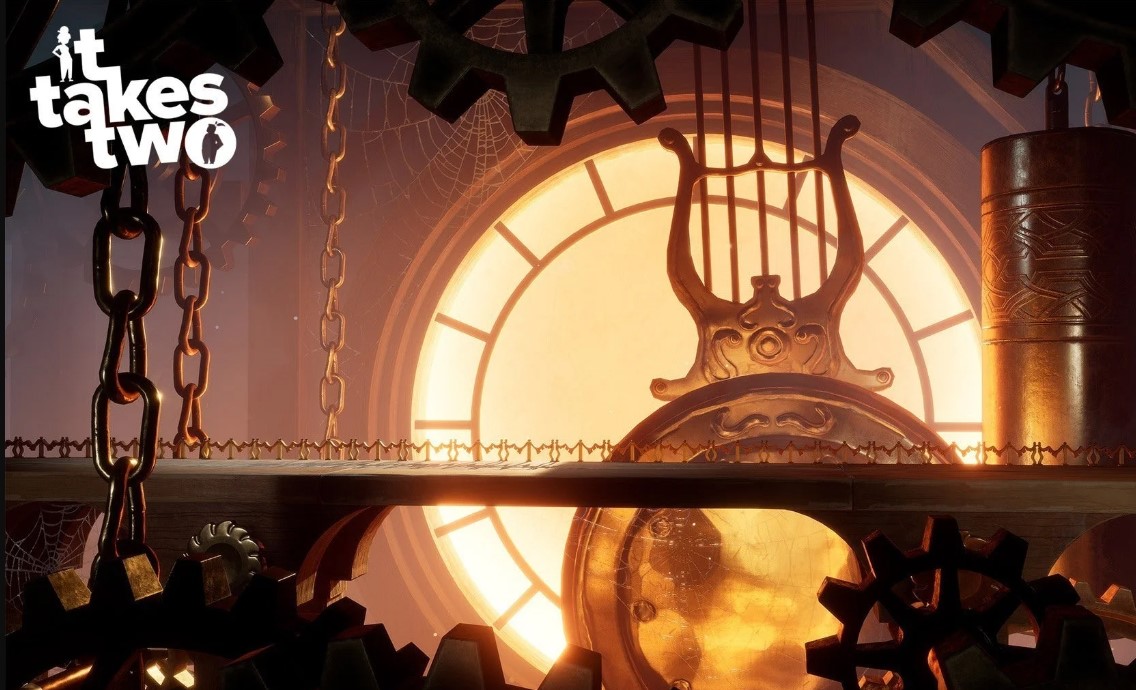
If we are talking about pure mechanical difficulty, The Clock (part of the Cuckoo Clock chapter) is a top contender. This is where the platforming gets precise. Cody can control time, and May can clone herself. You have to use these abilities in perfect sync. There are sections where you have to stand on a button, clone yourself, warp time to open a door, teleport back to the clone, and dash through before the door shuts.
It’s brain-melting. My partner and I spent probably 45 minutes on the bomb run section. You have to run through a village, disabling bombs before the timer runs out. It’s fast, frantic, and if you miss one jump, you fail. It’s easily one of the most frustrating It Takes Two chapters if you have slow reaction times.
Why The Clock Hurts:
- Strict Timers: You literally run out of time.
- Complex Puzzles: You have to think four steps ahead with the clone ability.
- The Bull Boss: You have to lure a mechanical bull into smashing a statue. It’s annoying because the bull’s hitbox feels huge.
The Snow Globe: Ice Physics Are the Worst
Water levels in games usually suck. Ice levels are a close second. The Snow Globe chapter introduces ice skating mechanics. It’s slippery. You have momentum that you can’t always control.
There is a race section here that isn’t required to beat the game, but if you are trying to get the achievement, it’s a nightmare. But the main story path has you using magnets. Magnets are fun, but the physics can be wonky. You push and pull objects (and each other) to get across gaps.
The underwater station looks cool visually, better than most cartoon-like games, but swimming controls? They are always a bit floaty. It’s not “throw your controller” hard, but it’s “sigh loudly” hard.
| Chapter | Main Mechanic | Frustration Level (1-10) |
| The Shed | Hammer & Nails | 2/10 |
| The Tree | Sap & Matches | 6/10 |
| Rose’s Room | Magic & Sword / Size change | 5/10 (Emotional Damage: 10/10) |
| Cuckoo Clock | Time Manipulation & Clones | 9/10 |
| Snow Globe | Magnets & Ice Skating | 7/10 |
| The Garden | Vines & Water / Sickle | 4/10 |
| The Attic | Music & Jetpacks | 3/10 |
The Garden: The Green Thumb Struggle
The Garden is gorgeous. It’s probably the best-looking area in the game. But don’t let the pretty flowers distract you. This is where you fight the Joy boss.
The Joy boss fight is a corrupted flower that transforms the garden. The fight has multiple phases. You have to deal with tainted plants, dodge roots, and manage your health. What makes this one of the harder It Takes Two chapters is the sheer amount of stuff happening on screen. It’s chaotic.
You also have the mole escape sequence. It’s a stealth section – sort of. You have to dig through the dirt while being chased by moles. The camera angle is top-down, and it’s hard to see where the obstacles are sometimes. One wrong turn and you get eaten.
The Attic: A Victory Lap?
By the time you reach The Attic, you expect the game to be impossibly hard. But… it’s actually kind of chill? The Attic is the final chapter. It focuses on music and sound. You get jetpacks. Flying around is awesome. The platforming feels forgiving because, well, you can fly.
There isn’t a massive, punishing final boss in the traditional sense. It’s more of a spectacle. The game wants you to finish. It wants you to see the ending. So, while it’s technically the end of the list of It Takes Two chapters, it’s not the peak of difficulty. That peak was definitely back in the Clock Tower.
It Takes Two Chapters – Ranking the Boss Fights
Since we are talking about difficulty, we have to mention the bosses. These It Takes Two chapters are defined by who you fight at the end. Some are a joke; others are surprisingly tanky:
- Giant Beetle (The Tree): Surprisingly tough because of the sliding mechanics.
- Moon Baboon (Rose’s Room): Long fight. Lots of lasers. You have to survive for a long time without messing up.
- Clockwork Bull (Cuckoo Clock): Fast, aggressive, and requires perfect baiting.
- Joy (The Garden): chaotic and messy.
- Vacuum Tower (The Shed): Easy once you get the rhythm.
The Moon Baboon is probably the one that gave us the most trouble. You are in a spaceship (sort of), and you have to dodge a laser grid. It feels like playing a bullet-hell shooter inside a platformer. If your partner sucks at dodging, you aren’t getting past this.
Why Do We Keep Playing the Hardest It Takes Two Chapters?
So, if some of these It Takes Two chapters are so annoying, why is the game so popular? It’s the variety. The game never lets you get bored. Just when you get sick of shooting sap at wasps, it turns into a flight simulator. When you get tired of that, it becomes a dungeon crawler. It respects your time by constantly showing you something new.
And honestly, the difficulty is fair. Checkpoints are generous. If you die, you respawn almost instantly. You don’t lose hours of progress. The game wants you to succeed, even if it wants to slap you around a bit first.
Tips for Surviving the Hardest It Takes Two Chapters
If you are stuck on any of the specific It Takes Two chapters, here are a few things that helped me and my Player 2:
- Spam the dash: The dash gives you a tiny bit of invincibility frames (I think). Use it to dodge through attacks, not just to move faster.
- Listen to the cues: Bosses usually yell or make a sound before a big attack. If you play with the sound off, you are making it harder on yourself.
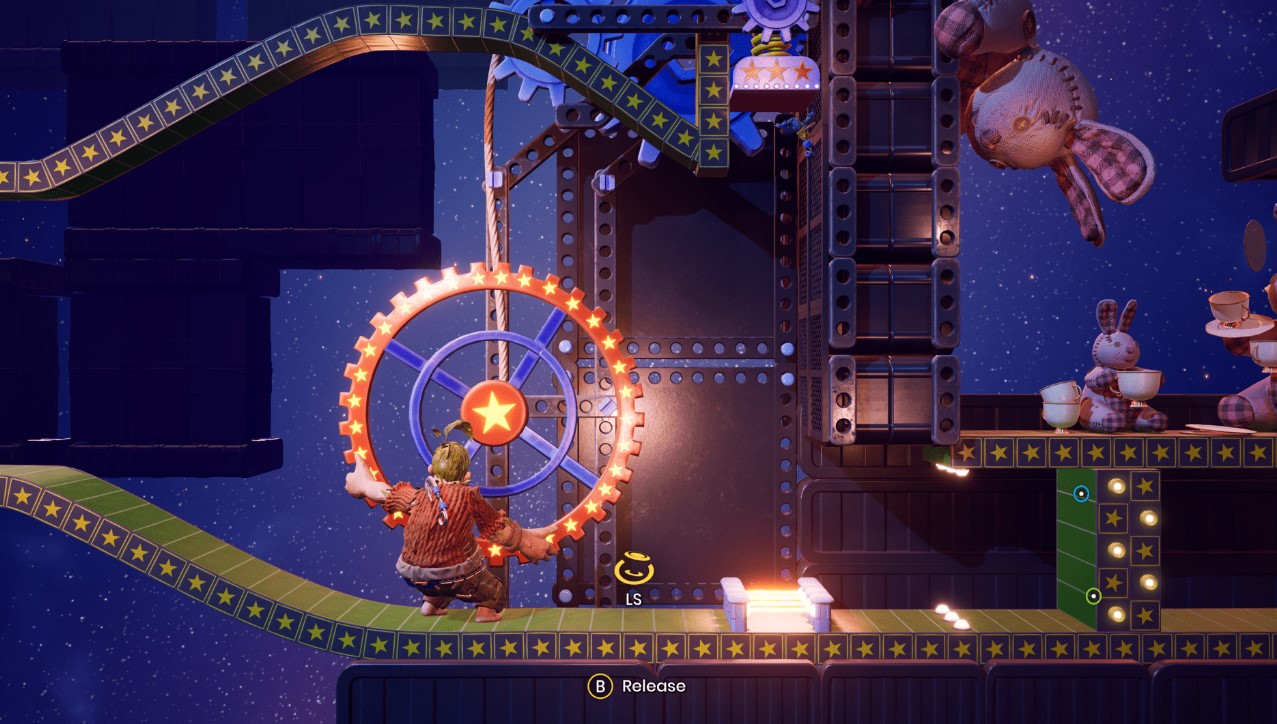
- Stop rushing: In the platforming sections, especially in the Clock Tower, patience is key. Wait for the cycle to reset. You don’t have to speedrun it.
- Look at your partner’s screen: Split-screen is there for a reason. Sometimes you can’t see the solution on your side, but it’s obvious on theirs. Cheat off their screen.
| Chapter Name | Estimated Playtime | Main Obstacle |
| The Shed | 30-45 Mins | Learning controls |
| The Tree | 1.5 Hours | Wasp Boss |
| Rose’s Room | 2-3 Hours | Length & Variety |
| Cuckoo Clock | 1.5 Hours | Precision Jumps |
| Snow Globe | 1.5 Hours | Slippery Physics |
| The Garden | 1.5 Hours | Chaotic fights |
| The Attic | 45 Mins | Enjoying the vibe |
So, Which It Takes Two Chapter Wins?
If I had to pick the absolute hardest of the It Takes Two chapters, I’d give the crown to The Cuckoo Clock. It’s just mechanically demanding. The time manipulation puzzles require brain power, and the platforming requires thumb skill. It’s the point in the game where “casual” players might hit a wall. Rose’s Room is a close second just because it is so long and exhausting, but the Clock Tower is where the controller-throwing happens.
But hey, when you finally beat it? That feeling is unmatched. You look at your partner, high-five (or press the button to high-five in-game), and feel like you actually accomplished something.
That’s the magic. It’s not about the frustration; it’s about overcoming it together. Even if you did scream at each other about the bomb timer three times in a row.
FAQ
How many It Takes Two chapters are there in total?
There are seven main chapters in the game, but each one is split into many smaller sub-sections and minigames.
Which chapter is the longest in the game?
Rose’s Room is widely considered the longest chapter due to its multiple game genres and lengthy dungeon crawler section.
Can you skip chapters in It Takes Two?
No, you have to play them for the first time, but you can use chapter select after you beat them.
Is the Elephant scene really that bad?
Gameplay-wise, it’s easy, but emotionally, it is one of the hardest moments to watch in any video game.
Do both players need to be good at gaming?
Not necessarily, but the Cuckoo Clock chapter requires both players to have decent timing and platforming skills.
What happens if one player dies?
You can button-mash to respawn quickly, as long as the other player stays alive; if both die, you restart the checkpoint.
Is The Attic harder than The Tree?
Generally, no; The Attic is more of a celebratory final lap, while The Tree has tougher combat encounters early on.
Conclusion
So there you have it. The breakdown of the pain. Whether you are stuck in the tree with the wasps or slipping around on the ice, just remember that every duo struggles. It’s part of the design. Good luck, and try not to break up over a video game.
If you enjoyed this breakdown, please support the team by bookmarking this page and sharing the post across your social media channels. We are also eager to explore new ventures, so reach out to ManillaGames directly if you are interested in creative or commercial collaboration. Let’s connect and create something incredible together!