
Minecraft Trail Ruins: The Ultimate Excavation Guide
You know what? Finding structures in Minecraft used to be pretty straightforward. You see a Village, you raid it. You spot a Desert Temple, you dodge the TNT, and grab the loot. But with the Trails & Tales update, Mojang threw us a curveball. They added something that – honestly – is kind of a pain to find but totally worth the hassle. I’m talking about Minecraft trail ruins.
These things aren’t massive castles sitting on top of a mountain. They are ancient, buried settlements that have been lost to time, literally covered in dirt and gravel. If you aren’t paying attention, you will walk right past them. I’ve done it. My friends have done it. It happens. But once you know what to look for, these ruins become one of the most exciting parts of exploration in modern Minecraft.
Why You Should Care About These Piles of Dirt?
Okay, look. I get it. Digging up gravel doesn’t sound like peak gameplay. But there is a catch. These ruins are the only place – literally the only place – where you can snag some specific Armor Trims and Pottery Sherds. If you want that sweet, sweet customization for your diamond gear, you have to get your hands dirty.
Plus, it gives you a reason to actually use the Brush tool. Remember that thing? Yeah, it’s finally useful here.
Where to Find Minecraft Trail Ruins?
This is the tricky part. You can’t just wander into a Plains biome and hope for the best. These structures are biome-specific. They spawn in places that are usually dense with trees or uneven terrain, which makes spotting them even harder.
| Biome Name | Visibility Difficulty | Notes |
| Taiga | Medium | Trees can block your view, but the terracotta stands out against the grass. |
| Snowy Taiga | Hard | Snow covers everything. You really need to look for odd block placements. |
| Old Growth Birch Forest | Hard | Tall trees make it tough to see the ground from an Elytra. |
| Old Growth Pine Taiga | Medium | Similar to regular Taiga but with taller trees. |
| Old Growth Spruce Taiga | Medium | Look for colored terracotta poking out of the podzol. |
| Jungle | Nightmare | Good luck. Vines and bushes hide everything. |
Honestly, if you find one in a Jungle, buy a lottery ticket. The density of the foliage makes it nearly impossible unless you literally trip over a block of terracotta.
How to Spot Them Without Losing Your Mind?
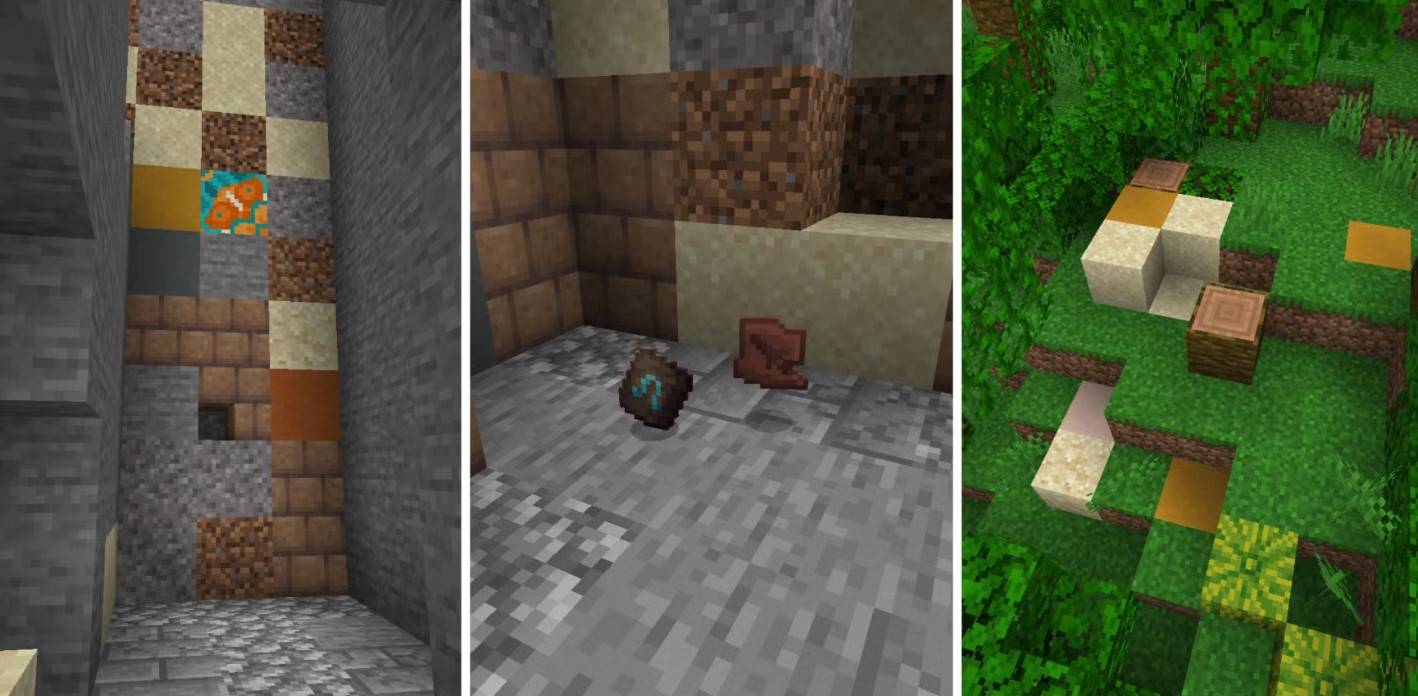
So, you are in the right biome. Now what? You are looking for blocks that don’t belong. Nature in Minecraft is pretty predictable. Dirt, grass, stone, trees. If you see a random block of Terracotta (usually colored orange, blue, or yellow) or Glazed Terracotta sticking out of the ground, stop. That’s it. That is the tip of the iceberg.
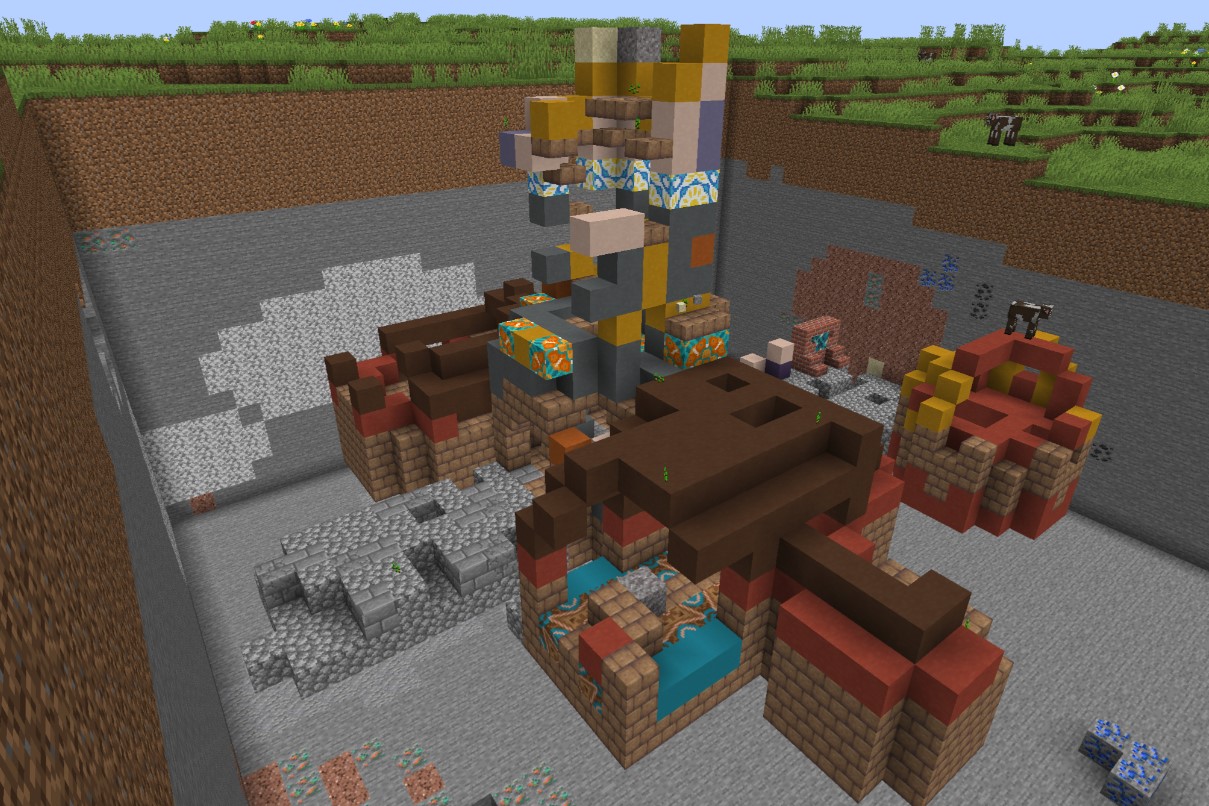
Most of the structure is underground. Usually, only the very top – like a chimney or a tower tip – is exposed. It looks like a mistake in the world generation, but it’s actually the entrance to a buried history.
Also, keep an eye out for Suspicious Gravel. It looks slightly different than normal gravel. If you break it with a shovel, you destroy the loot inside. Don’t do that.
Minecraft Trail Ruins Loot: Is It Worth It?
Short answer: Yes. Long answer: It depends on how much you care about aesthetics. You aren’t going to find god-tier enchanted apples or stacks of diamonds here. This is about culture, folks. It’s about looking cool on your server.
The loot tables for these ruins are split into two categories: generic junk (like wheat, dyes, and bricks) and the rare treasures buried in Suspicious Gravel.
Here is what you are actually looking for:
- Armor Trims: Specifically the Wayfinder, Raiser, Shaper, and Host armor trims.
- Pottery Sherds: There are tons of them here. Burn, Danger, Friend, Heart, Heartbreak, Howl, Miner, Mourner, Plenty, Prize, Sheaf, Shelter, Skull, and Snort sherds.
- Music Disc: The “Relic” disc by Aaron Cherof. It’s a banger.
If you are a collector, this place is a goldmine.
The Excavation Process: A Step-By-Step Guide
You found one? Nice. Now, don’t just go ham with a pickaxe. You risk breaking the Suspicious Gravel, and once that’s gone, the loot is gone. It doesn’t respawn.
Here is how I usually handle a dig site without ruining everything:
- Clear the trees: Chop down everything around the exposed blocks. You need space and light.
- Outline the perimeter: Dig a trench around the visible terracotta to see how wide the structure goes.
- Layer by layer: Remove the dirt and normal stone one layer at a time. Treat it like real archaeology.
- Brush everything: As soon as you see gravel, switch to your Brush. Hold right-click and wait for the item to pop out.
It takes time. I’m not gonna lie, it can be slow. But there is something oddly satisfying about revealing a whole street or room that was completely hidden a few minutes ago.
The Layout of The Ruins
The structure of these dungeons isn’t just one room. It’s basically a buried street. You’ll find a main road made of cobblestone or stone bricks, with small buildings attached to it. It feels like an ancient village that got hit by a mudslide.
The main central tower is usually where the best stuff is. It goes deep – sometimes really deep. I’ve had excavations go down 20 or 30 blocks before I hit the bottom.
Tools You Absolutely Need
Don’t show up unprepared. You don’t want to run back to your base halfway through because your inventory is full of dirt:
- Brush: Essential. Bring two or three. Copper is cheap anyway.
- Shovel: For the dirt and normal gravel.
- Pickaxe: For the terracotta and stone bricks.
- Shears: To clear leaves quickly.
- Shulker Boxes: You will have so much junk blocks by the end of this.
Suspicious Gravel vs. Suspicious Sand
In Desert Temples and Wells, you look for Suspicious Sand. In Minecraft trail ruins, it’s almost always Suspicious Gravel. It’s distinct, but in the dark, it can look just like regular gravel.
If you are using a texture pack or shaders, sometimes it’s hard to tell the difference. My advice? Just brush every piece of gravel you see connected to the structure. Better safe than sorry.
Why Armor Trims Changed the Game?
Before 1.20, everyone looked the same. Full Netherite, maybe some enchant glint. Boring. The Armor Trims found in the Minecraft trail ruins give you that “ancient warrior” vibe. The Shaper trim, for example, has these cool geometric patterns that look sick when you use Gold or Emerald as the material. The Wayfinder trim looks amazing on a chestplate.
It’s a flex. Walking around your SMP with a full set of trimmed armor shows you put in the work. You didn’t just trade with villagers; you went out and explored.
Problems You Might Run Into
It’s not all sunshine and pottery sherds. Digging these things up can be annoying:
- Water and Lava: Sometimes the world generation gets weird. I’ve found ruins that were cut in half by an aquifer. Trying to brush gravel underwater is a nightmare because you drown, and it’s slow. Bring a door or a potion of water breathing if you are near an ocean or river.
- Mobs: You are digging a big hole. Mobs love big holes. Creepers will fall in on your head while you are focused on brushing a block. Light up the area like it’s Times Square.
- Inventory Management: You will fill up on terracotta, dirt, and gravel so fast. If you aren’t a builder, just toss it. If you are a builder, though, these ruins are a great source of free terracotta.
Crafting with Pottery Sherds
So you got the sherds. Now what? You can’t use them individually. You have to craft a Decorated Pot.
You need four sherds (or bricks) to make a pot. You put them in a diamond shape in the crafting table. The cool thing is you can mix and match. Want a pot that tells a story of a heart breaking and a wolf howling? Use the Heartbreak and Howl sherds.
It’s a small detail, but it makes your base feel more lived-in.
The Lore Implications
Okay, I’m not a lore expert like MatPat, but these ruins clearly tell a story. Who lived here? Why is it all buried? The fact that we find “Host” armor trims suggests maybe these people were welcoming… or maybe they hosted something dangerous.
And the Sniffer egg? That’s the biggest clue. These people lived alongside ancient dinosaurs basically. The Sniffer is an ancient mob that digs up seeds. Finding their eggs in these ruins means the civilization that built them went extinct around the same time the Sniffers did. It adds a bit of mystery to the game that I really dig.
Comparing Minecraft Trail Ruins to Other Structures
How do they stack up against Strongholds or Bastions?
| Structure | Loot Value | Danger Level | Fun Factor |
| Trail Ruins | High (Cosmetic) | Low | Medium |
| Bastion | High (Gear) | Extreme | High |
| Desert Temple | Medium | Low | Low |
| Ancient City | Extreme | High | High |
Trail ruins are the “chill” option. You aren’t fighting Wardens or Piglin Brutes. You are just chilling, digging, and listening to a podcast. It’s relaxing.
Tips for Multiplayer Servers
If you play on a server, Minecraft trail ruins are high-value targets. Since they don’t regenerate loot, it’s first-come, first-served:
- Go far out: Don’t look near spawn. Those are already looted.
- Check the map: Use a mapping tool (if allowed) to spot the tell-tale terracotta patches.
- Leave a sign: If you loot one, leave a sign so the next guy doesn’t waste his time. It’s just polite.
The Sniffer Connection
I mentioned the Sniffer earlier, but let’s focus on it for a second. You find the Sniffer Egg in Suspicious Gravel here. This is the only way to get a Sniffer.
Once you find the egg, you have to place it on moss to hatch it faster. Then you have this big, mossy cow-thing sniffing around your base. It digs up Torchflower seeds and Pitcher pods. They don’t do much besides look pretty, but having a pet dinosaur is cool enough on its own.
Common Mistakes Players Make
I see people messing this up all the time:
- Using Fortune: Fortune picks do NOT help with Suspicious Gravel.
- Silk Touch: You can use Silk Touch to pick up the Suspicious Gravel block itself if you want to move it, but you still need a brush to get the loot.
- Ignoring the Small Structures: Sometimes the best loot is in the small side buildings, not just the main tower. Dig up the whole street.
Is It Worth the Time Investment?
Honestly? If you care about building and fashion, yes. If you are a technical player who just wants an Elytra and a Mob Switch, you can probably skip it. But Minecraft is getting more and more about expression. The armor trims are the ultimate form of expression right now.
Finding a trail ruin feels like finding a needle in a haystack, but that feeling when you brush away the dust and see a blue Relic disc pop out? That’s unmatched.
Advanced Excavation Techniques
If you want to get serious, you can set up a beacon with Haste II. It speeds up clearing the dirt and stone around the ruins significantly. Just be careful not to instamine the gravel.
Another trick is using TNT to clear the top layers of dirt. Just make sure you detonate it high enough that it doesn’t blow up the actual structure. It’s risky, but fast.
The Future of Archaeology in Minecraft
This update was just the beginning. The archaeology system has so much potential. Minecraft trail ruins are the first step. I hope they add more buried structures in other biomes – like frozen cities in the ice spikes or buried temples in the badlands.
For now, though, we have trail ruins. And you know what? They are pretty cool. They break up the monotony of caving and village raiding. They force you to slow down.
So, next time you are flying over a Taiga and you see a weird block of terracotta, go down there. Grab a brush. See what you find. You might just uncover a piece of history.
FAQ
What tool do I need for Minecraft trail ruins?
You absolutely need a Brush to get the loot from suspicious blocks. A shovel and pickaxe are needed to clear the dirt and stone around them.
Can I find diamonds in Minecraft trail ruins?
No, you won’t find diamonds or netherite here. The loot is focused on pottery sherds, armor trims, and the Sniffer egg.
How deep do Minecraft trail ruins go?
They can go pretty deep! The main tower often extends 20 to 30 blocks underground, so be prepared to dig a massive hole.
Do Minecraft trail ruins have chests?
No, they do not have chests. All the loot is hidden inside Suspicious Gravel blocks that you have to brush.
Can I spawn a Sniffer without finding a ruin?
Nope. Finding a Sniffer Egg in the Suspicious Gravel of a trail ruin (or sometimes an ocean ruin) is the only way to get one.
Are Minecraft trail ruins rare?
They are somewhat rare but mostly just hard to spot because they are buried. Once you know the biomes, you will find them eventually.
Can I move Suspicious Gravel?
Yes, if you use a tool with the Silk Touch enchantment, you can pick up the block without breaking it or losing the loot inside.
Conclusion
Minecraft trail ruins are a unique addition to the game that shifts the focus from combat to exploration and patience. They aren’t about getting overpowered gear; they are about the story and the style. Whether you are hunting for that last pottery sherd to finish your collection or you just want a Sniffer pet, these buried streets are worth the dig. So grab a brush, head to the Taiga, and start uncovering the past. Good luck out there!