
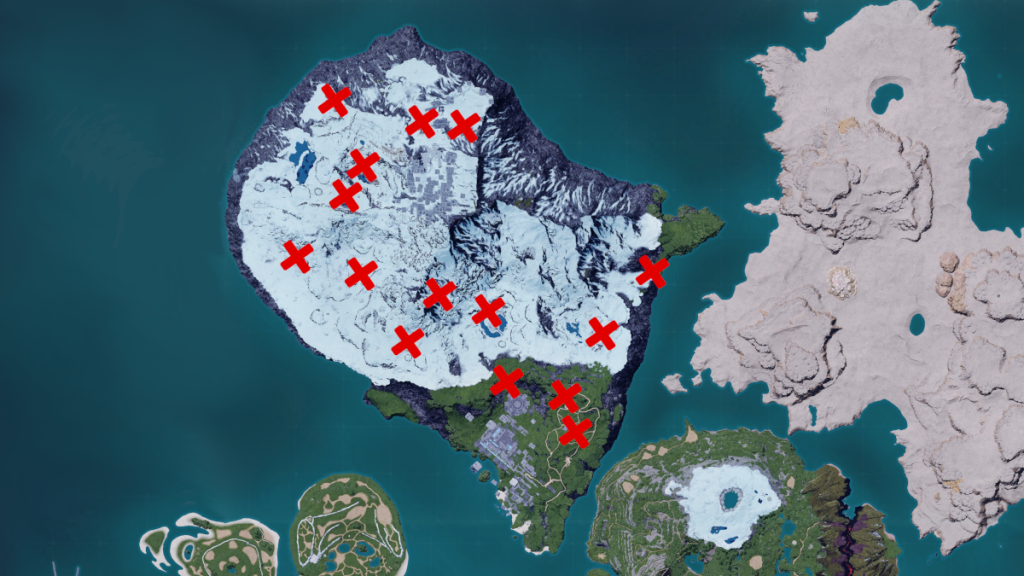
If you’ve spent any time exploring Palworld, you already know that behind its colorful creatures and cozy base-building lies a dangerous secret — dungeons. These mysterious caves are scattered across the world, offering valuable loot, rare resources, and powerful Alpha Pals waiting to be captured. But the real trick? Finding them. Because palworld dungeon locations change, vanish, and reappear over time.
This guide breaks down everything you need to know — from where dungeons spawn to how to prepare for them.
Expert note: Exact dungeon coordinates rotate and may vary by game version/patch. Use spawn zones and environmental cues from the tables below instead of relying on fixed points.
What Makes Dungeons Special in Palworld
Dungeons aren’t just regular caves. They’re limited-time events that open up in specific areas, stay active for a short period, then disappear. Inside, you’ll fight aggressive Pals, gather rare materials, and face a boss guarding high-tier rewards.
The risk is higher, but so are the rewards — advanced crafting blueprints, unique gear, rare accessories, and powerful Alpha Pals for bases and raids.
How Dungeon Spawns Work
The key to mastering palworld dungeon locations is understanding their spawn logic. They don’t stay fixed — they rotate through spawn zones across multiple biomes (mountain ranges, forest valleys, deserts, volcanic islands, snowy peaks, even underground pockets).
When one dungeon disappears, another usually opens elsewhere. Regular scouting and revisiting “familiar” areas every few in-game days is the best way to catch the spawn window.
| Biome / Area | Where to Look | Typical Threats & Rewards | Prep Tips |
|---|---|---|---|
| Mountain Regions | Dark openings on ledges and slopes | Mid-level mobs; stone/metal nodes | Grapple/flying Pal for climbs; extra ammo |
| Forest Valleys | Near starter zones and lowland valleys | Low-level foes; basic blueprints | Ideal for first dungeon runs |
| Remote Islands | Small islets off the mainland | Water-type Pals; aquatic loot | Flying Pal or boat; bring food |
| Volcanic Areas | Lava fields and heat-vent fissures | High level; fire threats; top-tier loot | Fire resistance gear/tonics; extra heals |
| Snowy Peaks | High-altitude grottos and icy mouths | Ice-types; crystals/frost ore | Cold protection; stamina management |
Common Dungeon Areas
Keep mountain hubs, starter forests, remote islands, the volcano, and glacial ridges on your circuit — active entrances rotate through these hotspots most frequently.
Notable Dungeon Names and Their Typical Levels
Exact spawn points vary, but several “families” of dungeons recur across the map:
| Dungeon | Typical Level | Alpha/Boss Pattern | Likely Rewards |
|---|---|---|---|
| Hillside Cavern | 10–15 | Early Alphas with simple attack patterns | Basic blueprints; ore/stone |
| Isolated Island Cavern | 13–20 | Water Alphas with ranged pressure | Aquatic loot; accessories |
| Ravine Grotto | 20–25 | Forest-style control and ambushes | Crafting mats; blue-tier schematics |
| Mountain Stream Grotto | 25–30 | Mixed threats; aggressive bosses | Rare resources; gear upgrades |
| Cavern of the Dunes | 35–40 | Heat/exhaustion; sand-aligned Alphas | Thermal protection; epic materials |
| Volcanic Cavern | 40+ | Fire bosses; heavy AoE | Top-grade mats; legendary schematics |
| Sacred Mountain Cavern | 45+ | Ice-types; slows and crowd control | Crystals; high-tier accessories |
| Feybreak Dungeon | 55+ | One of the toughest; phase mechanics | Legendary plans; rare Alpha chances |
How to Spot Dungeons on the Map
Look for dark, circular cave mouths in cliff faces or rock walls — they aren’t marked on the map. Tips:
- Scan slopes and cliffs — entrances blend into rocky textures.
- At night, faint interior glow is easier to notice.
- Scout from the air with a flying Pal to speed up searches.
- Revisit known areas every few in-game days — new dungeons can respawn nearby.
Preparing for a Dungeon Run
- Strong Pals: bring a balanced team (healing, tanking, elemental counters).
- Weapons & Ammo: firearms or upgraded melee for sustained fights.
- Armor/Resist: match protection to the biome (fire/cold/desert).
- Food & Heals: longer delves need constant recovery.
- Light Sources: torches or glow-capable Pals for dark sections.
- Storage: keep inventory slots open for loot.
Pro tip: set a nearby base/save before entering — activity windows can be short.
Dungeon Strategies and Progression Tips
- Move Slowly: avoid multi-pulls — ambushes are common.
- Use Environment: explosive barrels and chokepoints are your friends.
- Swap Pals: rotate to conserve stamina and counter enemy elements.
- Watch the Clock: dungeons despawn on a timer — plan your exit.
- Boss Last: clear trash first, then focus the Alpha.
Late-Game Dungeons: The Real Challenge
High-tier palworld dungeon locations (volcano/ice biomes) stress-test your build and resource management: elite Alphas drop rare crafting items and legendary schematics. In groups, bring multiple flyers to fast-track travel between entrances.
New patches add new biomes — and new spawn windows. Even veterans will always have something fresh to chase.
Final Thoughts
Mastering palworld dungeon locations isn’t just about loot — it’s the thrill of discovery, the rhythm of prep and risk, and that rush when an Alpha finally falls. Pack your gear, rally your Pals, and head out — another cave mouth is already opening beyond the next ridge.