
Silent Hill f walkthrough: chapter-by-chapter chapter order, puzzles, and combat basics for new players
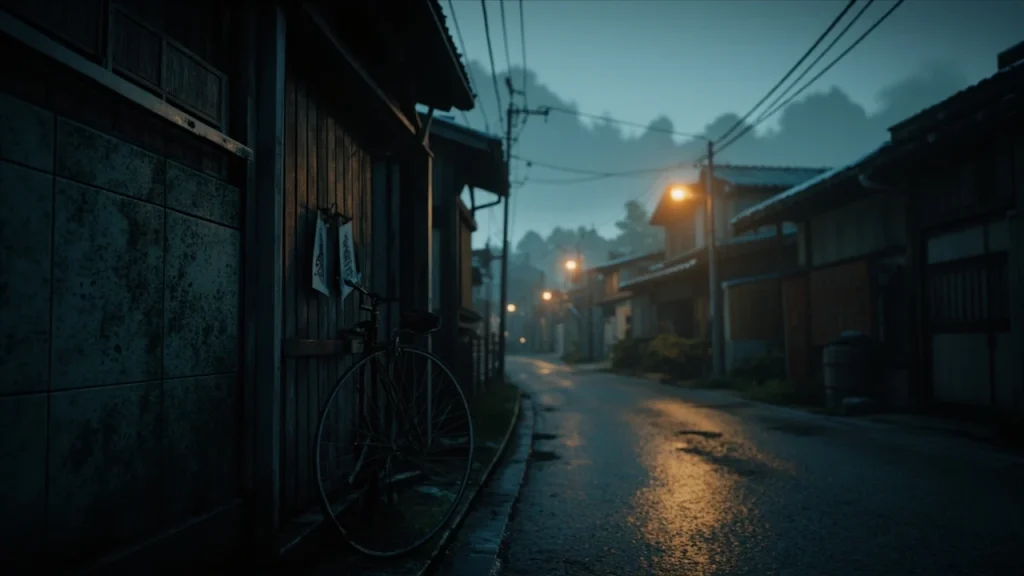
Hinako Shimizu wakes up on a tatami floor with the smell of incense in her nose, a hand-shaped bruise on her arm, and a town she barely recognizes pressing against the windows. That opening scene is the entry point most players carry into a Silent Hill f walkthrough: a teenage protagonist separated from her sister, a setting built from rural Showa-era Japan rather than the American Midwest, and a combat system that prefers hesitation over aggression. This guide exists to give new players a structured path through the main story without rewriting the narrative, naming every puzzle solution outright, or turning the experience into a checklist. It is written as a practical companion you can read once before starting, then keep open on a second device when a single section stalls you.
Because Silent Hill f blends linear story progression with optional exploration, a walkthrough is more useful when it explains when to stop and look around than when it lists every key you can pick up. The sections below mirror how most first-time players actually move through the game: an opening section that handles the interface and stamina basics, a chapter overview that names the towns, shrines, and boss encounters in order, a combat primer that covers the weight of the weapon in your hand, a puzzle note section that flags where you might get stuck, and a save and progress section that explains when the game checkpoints and when it does not. The goal is not to replace exploration but to make sure that when you do explore, you know roughly how far you are from the next fixed event.
One important note before you start. Silent Hill f is built around a Japanese setting called Ebisugaoka, a fictional mountain town loosely inspired by the real Kanazawa and the surrounding countryside. The story is presented in a story mode that lets you select a difficulty, and it has a New Game Plus loop that adds new equipment variants and ending flags. None of that changes the order of the chapters below, but it does change what you should focus on during your first run. If you are playing for the story, treat this walkthrough as a safety net for the moments where the game stops telling you where to go.
What to do in the prologue before chapter 1 begins
The prologue is short, but it teaches almost every system you will use for the rest of the game. You are introduced to Hinako in a domestic setting, then pushed out into the streets of Ebisugaoka, and finally dropped at a path that branches toward the first shrine. The most common mistake new players make here is to treat the prologue as a tutorial they can ignore. Instead, use it to learn three mechanics that quietly govern the rest of the campaign: stamina management, the focus system, and the save fountain mechanic.
Stamina is the small bar at the bottom of the screen that drains as you swing a weapon, dodge, or run. It regenerates quickly when you stop moving, but a heavy swing can leave you open long enough for a monster to land a free hit. Focus, by contrast, is the resource that fills as you land attacks or take damage and is spent to trigger special abilities tied to the weapon category you are using. Save fountains are the stone basins you will find near major checkpoints: interact with them to write your progress and to resupply with healing items that are stored in a small shared pool.
- Treat the first shrine encounter as your stamina tutorial: swing once, dodge once, and watch how the bar refills.
- When the prompt for the focus ability appears, use it once to see its animation; you will use a similar pattern in every chapter.
- Find the first save fountain and write your progress before you push past it, even if the next area looks short.
- Pick up every consumable on the ground; the inventory is generous early and stingy late.
By the time the prologue fades to the title card, you should have a feel for how Hinako moves, how loud a swing is, and how the game signals a transition between safe and unsafe zones. If any of those still feel unfamiliar, replay the first encounter. The game autosaves at the end of the prologue, and you lose nothing by repeating it.
Chapter order through the main story
Silent Hill f is structured around a set of named chapters that map onto a fixed progression through Ebisugaoka. The chapter names below use the in-game order of events rather than any developer numbering, because the story is delivered in continuous scenes with title cards between them. Treat each entry as a region plus a purpose, not just a name, so that when you read hints later in the guide you know roughly which part of town the game expects you to be in.
| Chapter | Setting | Primary objective | Notable encounters |
|---|
That order holds for every first-time playthrough on any difficulty. The differences between Story, Standard, and Hardcore modes show up in enemy health, item scarcity, and the number of continues you are allowed at boss fights, not in the structural shape of the chapters. If you hear someone describe “a different route” in the back half of the game, they are almost always talking about the New Game Plus variations rather than an alternate first-playthrough path.
Chapter 1: The Fog Rolls In
You begin Chapter 1 at the edge of a residential block near the Shimizu home. The objective is to push through the lower town toward Ebisugaoka Middle School, where Hinako’s friend Shu is waiting. This chapter is intentionally short and is meant to anchor the world: the streets are wide, the monsters appear in pairs, and the only real puzzle is a locked gate that requires a key held by an NPC you meet in a side alley. Take your time here. The temptation is to sprint to the school, but several side houses contain documents that explain the town’s history and a few consumables that smooth out Chapter 2.
Combat in Chapter 1 is about restraint. Most enemies can be killed in three or four swings of the wooden stick you start with, and they telegraph every attack with a brief wind-up. The core loop is simple: wait for the wind-up, dodge once, then punish with one or two swings. Try to keep your stamina above the halfway mark at all times; an empty stamina bar in a two-enemy pack is the most common cause of early death. The save fountain at the end of the chapter, just before the school gates, is the one you want to reach before you take any risk.
- Open every drawer in the first three houses; one contains a healing item and another contains a note that unlocks a dialogue option later.
- When you meet the NPC with the gate key, read the optional dialogue twice; it explains a small mechanic that resurfaces in Chapter 4.
- Do not engage the optional enemy on the rooftop unless you are practicing the dodge timing. There is no reward for killing it.
Chapter 2: The Shrine on the Hill
Chapter 2 shifts the environment from town to forest. You follow a gravel path that climbs the mountain behind Ebisugaoka, with the first talisman located at a small shrine near a waterfall. The enemies here are faster than the street monsters in Chapter 1, and a few of them are archer types that force you to break line of sight. The mini-boss at the shrine is a tall figure with a long weapon; it is designed to teach you how to circle-strafe and how to read a two-part combo. Once the talisman is collected, the path back to town is shorter than the path up, which the game signals by changing the lighting and reducing the number of enemies on the way down.
This chapter is also where the save fountain mechanic becomes important. You will find a fountain about two-thirds of the way up the mountain path, just before a wooden bridge. Use it. The shrine itself contains a second fountain inside the prayer hall, but reaching it requires the talisman puzzle described in the next section. If you die on the way back down, you will respawn at the lower fountain, and the climb back up will take longer than you expect.
Puzzle notes: where players get stuck
Silent For additional context, Hill f uses light puzzles and pattern puzzles rather than the environmental riddles of the older Silent Hill games. Most of them are solvable with one or two hints, and the game almost never requires a written solution. The notes below cover the puzzles that players most often ask about, with the reasoning behind the answer rather than the answer itself.
| Puzzle | Where it appears | What you need to notice |
|---|---|---|
| Locked school gate | Chapter 1, near the first alley | The key is held by an NPC you must speak to twice; the second conversation unlocks the key. |
| Shrine offering puzzle | Chapter 2, inside the prayer hall | Three offering bowls must be filled in the order they appear in the engraved wooden plaque near the altar. |
| Well light puzzle | Chapter 3, after descending the stairs | Five lanterns must be lit; the correct pattern is shown on a scroll found in the previous room. |
| School locker sequence | Chapter 4, second floor hallway | The lockers open in the order of the student numbers on the classroom blackboard; you can read them from the hall window. |
| Ritual room combination | Chapter 5, final door of the red house | The combination is hidden in three notes scattered across the previous three chapters, not in the current room. |
If you are stuck on a puzzle and the walkthrough above does not name the exact chapter, the most common cause is that you are missing a document. The game places a small icon over interactable objects that contain a note, and a different icon for items that are pure flavor. When in doubt, read everything. Notes that look like flavor are sometimes load-bearing for the next puzzle.
Combat basics and weapon categories
Combat in Silent Hill f is slower and more deliberate than the combat in most action-horror games. The default control scheme puts a light attack on the main button, a heavy attack on a trigger, a dodge on a separate input, and a focus ability on a long press. None of these inputs is a “best” input; they are all context-sensitive. The walkthrough below covers the weapon categories, the focus abilities tied to each, and the situations in which they are most useful.
- Short blades: knives, broken bottles, and short swords. They swing quickly, drain little stamina, and unlock a focus ability that gives a brief damage window. They are best against fast single enemies and during chase sequences.
- Long blades: katanas, naginata, and wooden swords. They swing slowly, drain more stamina, and unlock a focus ability that briefly slows time around the player. They are best against groups and against mini-bosses with a single large hurtbox.
- Blunt weapons: pipes, wooden sticks, and a heavy mallet found late in the game. They have the highest stagger damage and the longest recovery, and they unlock a focus ability that knocks down any enemy in a short cone. They are best for crowd control and for interrupting a charging attack.
- Thrown weapons: rocks, talismans, and a few one-use items. They are useful for pulling a single enemy out of a pack, not for sustained damage.
You can carry two weapons at a time and swap between them with a single button. The general rule is to keep one short blade equipped for normal exploration and switch to a long blade or blunt weapon for any encounter that you can see coming. The game does not penalize you for swapping, but it does penalize you for committing to a long animation when the encounter is actually a small group of fast enemies. The save fountain outside a tough area is the right place to swap your loadout, not the middle of the room.
Item management and healing
Healing items in Silent Hill f are stored in a small shared pool rather than in your direct inventory. When you pick up a healing item, the icon appears in the corner of the screen and the count goes up by one. When you take damage, you press the heal input, the game spends one item from the pool, and your health refills. This system has two consequences that surprise new players. First, you can pick up healing items that you do not need immediately and they will be available later, even after death, as long as the save fountain remembers them. Second, you can run out of healing items entirely if you keep using them on small hits, which leaves you with no recovery for a real emergency later.
The walkthrough approach to item management is to treat healing items as a long-term resource. Take a small hit and your health is still high: do not heal. Take a hit that drops you below half: heal, but only once. Take a hit that drops you to a sliver: heal and back away to a safe zone. The same logic applies to focus items, which refill the focus bar but are rarer than healing items. A useful mental rule is that you should never end a chapter with zero healing items and zero focus items; if you do, the next chapter will feel harder than it should.
Save fountains, checkpoints, and when to backtrack
Save fountains are the only way to write your progress in Silent Hill f. The game autosaves at the end of every chapter, but it does not autosave inside a chapter. If you die inside Chapter 3, you respawn at the last save fountain you touched, which is usually the one at the start of Chapter 3. The fountain also resupplies your healing pool, which is why a quick visit to a nearby fountain is sometimes the difference between finishing a chapter and running out of resources halfway through it.
Backtracking is built into the chapter design, but the game is not always explicit about it. After a major encounter, the same path you used to enter the area often becomes a one-way shortcut, with a new door or a broken wall that you can use to skip the long route on the way out. The walkthrough recommendation is to explore the long route on your first pass through any chapter, and to use the shortcuts on every subsequent pass. The shortcuts also lead to small optional areas that contain a single document or a single consumable; they are worth a quick check but not worth a full detour.
Story-mode choices and their mechanical effects
Silent Hill f is a story-led game, and most of its choices are about tone rather than mechanics. There are, however, a small number of choices that affect which ending you can reach and which equipment variants are available in New Game Plus. The walkthrough below names those choices without giving the answer; the point is to know that they exist so that you do not make them by accident.
- The prayer at the Chapter 2 shrine: the order of the offering bowls is mechanically fixed, but the prayer Hinako says before each offering is a choice. Three different prayer lines are available, and the line you choose changes the dialogue in Chapter 5.
- The classroom dialogue in Chapter 4: a short conversation with Rinko in the second floor classroom has a single question with three possible answers. The answer affects whether Rinko appears in the Chapter 5 ritual room and, if she does, what she says.
- The choice at the Chapter 5 ritual: this is the first true ending choice. It is presented as a binary prompt with a brief timer, and the answer you give changes which ending flag is set for New Game Plus.
- The Chapter 7 final ritual: a similar binary prompt with a longer timer. The answer here locks the ending and unlocks the corresponding equipment variant in New Game Plus.
If you want to see all of the endings on a single save, you cannot. Endings require a new save, a reload of an earlier save, or a New Game Plus run with the right flag set. The walkthrough recommendation for a first playthrough is to choose the option that fits the role you have been playing as Hinako. The mechanical differences between the endings are small; the narrative differences are the point.
Boss strategy overview for each major fight
Boss fights in Silent Hill f are not difficulty spikes. They are designed to test one specific combat skill that the previous chapter has been quietly teaching. The table below names the boss, the chapter it appears in, the skill it tests, and the weapon category that the game expects you to use. If you are struggling with a boss, the answer is almost always to switch weapon category, not to grind for more healing items.
| Boss | Chapter | Skill tested | Recommended weapon |
|---|---|---|---|
| Shrine guardian | Chapter 2 | Circle-strafing a slow two-part combo | Long blade, with a blunt weapon for stagger windows |
| Well keeper | Chapter 3 | Light management and patience | Short blade, because most of the fight is about avoiding light, not dealing damage |
| School apparition | Chapter 4 | Chase sequence and door prioritization | Short blade for the chase, blunt weapon for the final room |
| First ending trigger | Chapter 5 | Reading a two-phase attack pattern | Long blade for phase one, blunt weapon for phase two |
| Twisted town mini-boss | Chapter 6 | Crowd control under pressure | Blunt weapon, because most of the room is filled with adds |
| Final boss | Chapter 7 | Two-phase pattern recognition and stamina budgeting | Long blade for phase one, your strongest weapon for phase two |
The general boss strategy is the same across the game. Stay close enough to read the wind-up, far enough to dodge the first swing, and patient enough to only commit to a punish when the boss is in a recovery animation. The focus ability should be saved for the moment when the boss opens a stagger window; using it during the first half of a fight usually wastes it.
New Game Plus and what carries over
After the credits, Silent Hill f offers a New Game Plus mode that replays the same chapter structure with a higher difficulty and a set of new equipment variants. The walkthrough is essentially the same in New Game Plus, but the resource economy is much tighter, and a few of the optional documents are replaced by new lore entries that fill in the ending you did not choose. The list below covers what carries over and what does not, so that you can plan a New Game Plus run if you decide to start one.
- Carries over: weapon proficiency, focus ability upgrades, ending flags, and any equipment variants you have unlocked.
- Does not carry over: healing items, focus items, the contents of the shared pool, and the locations of save fountains.
- Unlocks on first New Game Plus: a third difficulty tier, a small set of cosmetic items, and an additional ending that is only reachable from a New Game Plus save.
- Unlocks on second New Game Plus: the hardest difficulty, the final ending, and the achievement tied to seeing every ending on a single profile.
Because the New Game Plus resource economy is tighter, the walkthrough for a second playthrough is to be more conservative with healing items and to lean on the focus ability more aggressively. The hardest difficulty tier is best approached with a fully upgraded long blade, because the stagger windows on the bosses are smaller and you need a weapon that can punish them quickly.
Accessibility, settings, and difficulty differences
Silent Hill f ships with a settings menu that lets you adjust aim assist, dodge window length, camera sensitivity, and a small set of accessibility toggles. The difficulty differences between Story, Standard, and Hardcore modes are mostly about enemy health and item scarcity; none of them changes the chapter order or the puzzle solutions. The walkthrough recommendation for new players is to start on Standard, and to drop to Story if a single boss fight takes more than six or seven attempts. The accessibility toggles are independent of difficulty and can be turned on or off at any time, including during a boss fight, which is useful if a particular encounter is more about timing than about damage.
One small note about subtitles and language. The game ships with English and Japanese voice tracks and a separate set of subtitle languages. The Japanese voice track is the one most reviewers and streamers use, because the original cast includes several established Japanese actors and the tone of the performances is calibrated to that language. The English voice track is faithful to the script and is the right choice if Japanese audio is distracting. The subtitle language should match the voice track; mixing the two is supported but can make certain dialogue lines feel slightly out of sync.
How this walkthrough fits the larger Silent Hill series
For readers who arrived at this page from the broader Silent Hill community, a quick orientation helps. The series has historically been divided between the original four Silent Hill games, the Silent Hill 2 remake, and the spin-offs. Silent Hill f is set in a different country and a different era than any of those, with a teenage protagonist and a Japanese setting that is built from Showa-era architecture rather than the American Midwest. The combat system is closer to the modern action-horror style than to the tank-control era, but the psychological horror beats, the use of fog, and the preference for implication over explicit violence are consistent with the series. A useful companion read for new players is the existing silent hill 2 remake walkthrough, which covers a related entry in the franchise and explains how a Silent Hill walkthrough is typically structured for a player who is seeing the game for the first time. For a wider view of how survival horror games approach level design and resource scarcity, the best indie games guide touches on how small studios build tension with similar mechanics, which can help frame the design decisions that show up across the series.
Frequently asked questions
How long is the Silent Hill f main story?
A first playthrough on Standard difficulty runs roughly 15 to 20 hours, depending on how much optional exploration you do. A focused run that skips most side areas can finish in around 12 hours, and a completionist run that reads every document and clears every optional encounter can push past 25 hours. New Game Plus adds another 12 to 18 hours per cycle, and there are three cycles needed to see every ending on a single profile.
Can I play Silent Hill f before any other Silent Hill game?
Yes. The story is self-contained and the characters are new to the series. The game does reference a few recurring series ideas, but the references are background lore rather than plot points, and the walkthrough above does not assume you have played any previous entry.
What difficulty should I choose for my first run?
Standard is the right starting point for most players. Story mode is appropriate if you are primarily interested in the narrative and do not want the combat to gate your progress. Hardcore mode is designed for repeat playthroughs and is not recommended on a first run, because it changes the resource economy in ways that are only obvious if you already know where the healing items are placed.
Do I need to find every document to understand the story?
No. The main story is fully readable without any of the optional documents, and the ending choice is presented with all the context you need. The documents add background lore and a few dialogue variations, and they are worth reading on a second playthrough if you enjoyed the first. The walkthrough flags the documents that are mechanically important, and those are the ones to read on a first run.
Are there missable items or choices in Silent Hill f?
Yes, but the game is generally good about warning you. A choice that affects an ending flag is presented with a brief cinematic that signals its importance, and the autosave at the end of the chapter makes it possible to reload and pick a different option. Missable items are mostly optional equipment variants, which are not needed to finish the game but are useful in New Game Plus. The walkthrough above names the four mechanically important choices so that you can recognize them when they appear.
Does the game autosave, or do I have to find a save fountain?
Both. The game autosaves at the end of every chapter and at a few fixed story beats, but it does not autosave inside a chapter. If you die inside a chapter, you respawn at the last save fountain you touched. The walkthrough recommends touching a save fountain any time you find one, even if the next area looks short, because the fountain also resupplies your healing pool.
Can I replay a single chapter without restarting the game?
No. There is no chapter select in the main game, and the only way to replay a chapter is to load an earlier save, restart from the autosave at the end of the previous chapter, or start a New Game Plus run. The autosave at the end of each chapter is the right safety net, because it gives you a stable checkpoint without forcing you to redo the previous chapter in full.
Is Silent Hill f connected to Silent Hill 2 or the rest of the series?
Thematically, yes. Mechanically, no. The game shares the series’ interest in psychological horror, fog, and implied violence, but it is set in a different country, with a different protagonist, and a combat system that is closer to modern action-horror than to the original Silent Hill games. The walkthrough treats Silent Hill f as a standalone title and does not require any knowledge of the rest of the series to follow.
Where can I read more about the design of survival horror games?
For a broader look at how small studios build tension with limited resources, the best indie games guide covers several examples of constraint-driven horror design. For a related walkthrough in the same franchise, the silent hill 2 remake walkthrough shows how a similar chapter structure plays out in a different setting. External context on the game’s design intent and release context is available on the Silent Hill f Wikipedia page, and the Australian classification decision that affected the game’s release is documented in a press report on the Silent Hill f classification refusal, which provides useful background for this point.
What should I do after finishing the main story?
The most useful next step is a New Game Plus run with a different ending choice, because the second cycle unlocks the equipment variants that make the hardest difficulty more manageable. If you would rather move to a different game first, the Silent Hill 2 remake is a natural follow-up for players who enjoyed the series’ emphasis on psychological horror, and the indie horror scene offers several shorter titles that explore similar themes with smaller teams and tighter runtimes.