
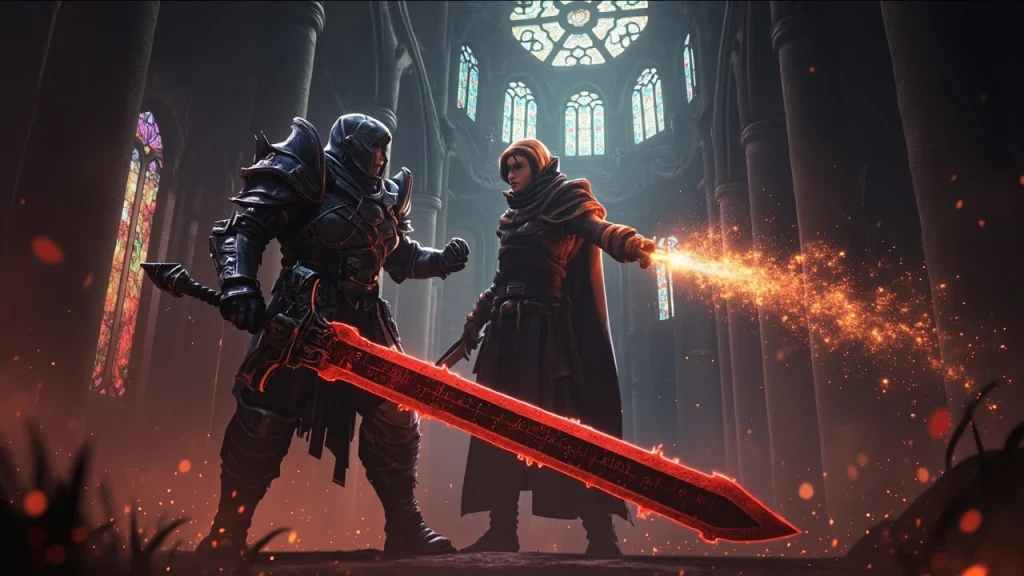
Code Vein 2: how a sequel shapes the action RPG it inherits
The original Code Vein launched in 2019 as Bandai Namco’s response to the surge of anime-styled soulslike action games, pairing a vampire gothic setting with a partner-driven co-op twist on the souls formula. Six years later, the studio has confirmed that a sequel is in development under the working title code vein 2, with the first trailer and a press release pointing toward a multi-platform release and a noticeably more open mission structure. For developers, designers, and players who follow the genre closely, the announcement is less about a single new feature and more about how a sequel balances its predecessor’s established mechanics, audience expectations, and the wider evolution of action RPG design since 2019.
This page treats the sequel as a game development and game design story. It looks at what has been confirmed publicly, what the design direction appears to be based on the trailer and producer interviews, and what remains open. It is not a player walkthrough and not a hype piece; it is a measured brief for readers who want to understand how a sequel is being put together, why certain design decisions matter, and which questions still need an official answer before the article can be updated with certainty.
What Bandai Namco has confirmed about code vein 2
As of early 2026, the public information on the sequel consists of a first announcement, a short gameplay reveal, a producer interview, and platform listings on the official site. Several details are fixed, others are deliberately left open, and a number of community discussions assume more than has been said. Sorting these layers is the first job of any analysis that wants to be useful to a development-minded reader.
- Developer and publisher. Bandai Namco Studios is leading development internally, with Bandai Namco Entertainment publishing, mirroring the production structure of the first game.
- Working title and brand. The product is presented as a direct sequel under the established franchise name, not a remake, remaster, or spin-off.
- Platforms. The first official material lists current-generation consoles and PC as the confirmed targets. Last-generation-only parity has not been announced.
- Setting. The trailer moves the action to a new region beyond the original Vein, with a fresh cast of revenants and a story framed around the collapse of the existing order.
- Release window. A launch window has been communicated publicly; a specific day, price, and edition breakdown have not been finalized at the time of writing.
Everything beyond this list should be treated as observation, developer commentary, or community inference rather than confirmed feature. The sequel’s design is a moving target while it is in production, and the most responsible brief separates confirmed facts from interpretation in every section that follows.
Why the original Code Vein still shapes the sequel
A sequel inherits more than a brand name. It inherits a player muscle memory, a community vocabulary, and a set of design assumptions that were load-bearing in the first game. The original Code Vein paired a souls-style stamina combat loop with a co-op partner system, a heavy gothic anime aesthetic, and a class system built around blood codes. For readers who never played it, a quick recap makes the sequel’s design constraints obvious.
The combat loop is built around light and heavy attacks, a drain mechanic that uses a recoverable resource to power abilities, and a stance swap that turns the player into a slower, harder-hitting form. Blood codes determine a loadout of weapon moves, passive buffs, and a focus stat that changes how each ability scales. Partners, both AI and human, slot into the same combat system, which means every design change in the sequel touches solo play, co-op, and AI behavior at the same time.
That interconnection is the single biggest reason a sequel is harder to design than a fresh project. A team that wants to change how the stamina loop feels, for example, has to also revisit partner AI, balance encounters that were tuned for the old rhythm, and decide whether new players should be able to skip the partner system without breaking the intended experience. The same constraint applies to the sequel’s blood code system, mission design, and loot philosophy, all of which the trailer hints are being revised.
Confirmed changes and design signals from the trailer
The first gameplay trailer for code vein 2 does more than introduce a new map. It telegraphs a series of design decisions that the development team is willing to talk about publicly and several that are still being tested behind closed doors. Reading the trailer in that frame is more useful than treating it as a feature list.
Mission structure and the move toward a more open world
The original game was a corridor action RPG with discrete levels tied together through a hub. The sequel’s trailer shows a wider traversal space, a visibly larger vertical layer in the architecture, and traversal that suggests optional paths around rather than through encounters. None of this confirms an open world in the strict sense. It is closer to a set of connected field maps with optional side content, which is the structure most action RPGs of this scale have settled on since 2020.
For developers, the interesting part is the production cost. A more open mission structure changes how levels are blocked, how save points are placed, how encounter designers tune difficulty, and how narrative beats are staged. The studio will also have to decide how the partner system fits into a more open space, since the original partner was tuned for tight arena fights. The trailer shows the partner moving through the same field as the player, which implies at least a partial rework of the partner pathing layer.
Combat rhythm and the stamina resource
The combat in the trailer reads faster than the first game. Dodges appear shorter, attack recovery windows look tighter, and the visible stamina bar is a different shape on screen. The producer interview accompanying the trailer says explicitly that the team wants the sequel to feel more responsive, with shorter animations that reward aggressive play. That phrasing is consistent with how the wider action RPG market has moved since 2019, and it sets a clear design target.
For a development reader, the relevant question is how the team will preserve the slow, deliberate soulslike edge while making the rhythm faster. Options on the table include shorter base animation times, lower stamina costs on the most-used moves, a charged-attack window that preserves commitment, and a redesigned parry or bayonet system. The trailer does not confirm which of these the team has chosen, but it does confirm that the team has accepted the design pressure to keep the game readable to a 2026 audience without abandoning the genre the franchise is known for.
Blood codes and the loadout system
The trailer shows a different loadout screen from the first game, and the producer interview describes a more flexible progression system with more mixing of abilities across codes. Reading between the lines, the team is loosening the rigid class identity of the first game in favor of a build-it-yourself feel. That is a real design choice, not a marketing line, because it changes how encounter designers plan enemy resistances, how PvP or asynchronous co-op is balanced, and how new players experience the first ten hours.
From a production standpoint, a more flexible system also pushes the team toward deeper tooltips, more robust reset options, and a tutorial flow that does not assume the player has read the manual. None of that is visible in a trailer, but it is the kind of downstream cost that explains why some features get cut and others get expanded during a sequel’s production cycle.
Narrative framing and the cast
The original Code Vein told a tightly compressed story about a small group of revenants trying to save a single city. The sequel’s trailer points to a broader cast, a wider geography, and a story about an order in collapse rather than a city under siege. The narrative team appears to be moving from a survival story to a rebuilding story, which changes the emotional register of the game and the way side content is written.
For a player, this is a tonal change. For a designer, it changes the briefing flow in missions, the kinds of NPCs the player meets, and the ratio of scripted set pieces to systemic storytelling. The sequel’s writing is one of the harder parts to evaluate from outside the studio, and it is the area where official previews, once released, will be most worth reading carefully.
What stays the same, and why that matters
Sequels earn the right to change mechanics, but they also have to keep the parts of the original that gave the franchise its identity. Several core ideas appear to carry over to code vein 2, and they are the parts most likely to anchor the sequel’s design across the rest of production.
| Element | Status for code vein 2 | Why it matters for design |
|---|---|---|
| Revenants and vampires as a setting core | Carried over with new lore framing | Keeps the gothic anime identity and the visual language the franchise is recognized for |
| Stamina-driven combat | Carried over with revised animation timing | Defines the soulslike genre boundary and constrains encounter design |
| Blood code loadout system | Carried over with more flexible mixing | Sets the build identity and tutorial complexity for new players |
| Partner-driven co-op | Carried over with revised pathing for larger maps | Defines the asynchronous and drop-in co-op loop that distinguishes the franchise |
| Death and recovery loop | Carried over with adjusted currency rules | Drives the difficulty curve and the risk-versus-reward decision in every encounter |
These are the elements a development reader should watch in every official update. They are also the elements most likely to be tuned, rather than replaced, between the trailer and the final release. Tuning is the work that defines a sequel and is usually invisible until the game ships.
Production context: a sequel inside a working franchise
Code For additional context, Vein launched as a game that needed a sequel. It sold enough to justify continued investment, and the franchise’s gothic anime identity gave Bandai Namco a recognizable property in a genre that has only grown more competitive since 2019. The decision to develop a direct sequel, rather than a remaster or a spin-off, is a statement about how the publisher wants the franchise positioned in its own portfolio.
That context matters because it changes what a sequel has to deliver. A remaster is allowed to be conservative; a direct sequel is not. The development team has to justify the new product line to players who already own the original, while still opening the door to players who have never touched the franchise. That tension shapes every design decision, from the difficulty of the first hour of the game to the kind of tutorial content the team is willing to ship.
Team structure and known leadership
Producer statements around the first game positioned the development team as an internal Bandai Namco group with experience across action and RPG titles. The sequel’s press material lists overlapping leadership with the first game, which is common for a franchise sequel and useful for continuity but not a guarantee of identical creative direction. Internal reorganizations during a multi-year production are normal, and the role assignments of the key creative leads at launch will matter more than the credit list on the trailer.
For a reader who follows the industry, the names to watch are the director, the lead combat designer, the lead mission designer, and the lead narrative designer. Those four roles, more than any other, will determine whether the sequel feels like a refinement of the first game or a genuine re-imagining.
Engine, tools, and the carryover question
The studio has not publicly confirmed a switch of engine for the sequel. The original game shipped on an internal Bandai Namco toolset, and sequels at large publishers usually stay on a refined version of the same engine unless there is a strong reason to migrate. A carryover engine explains a lot of the visual continuity between the trailer and the first game, including the way lighting, character models, and animation blending look. It also explains the more open mission structure, since a mature internal engine is more likely to support streaming and larger field maps than a brand-new toolchain that is still being stabilized.
For a development reader, the engine question is mostly relevant because it sets expectations for modding support, performance scaling on PC, and the timing of any post-launch patches. A sequel that ships on a refined internal engine can usually be patched and supported more aggressively than one that ships on a freshly licensed stack.
What the trailer implies about player experience
Trailers are sales tools, but they are also design documents, because every shot is a decision someone on the team approved. Reading the code vein 2 trailer as a design document, several things stand out about the intended player experience.
- The sequel wants to feel more aggressive. The animation timing, the visual emphasis on closer camera angles, and the increased visibility of the stamina bar all point to a game that wants the player to commit to a fight, not to wait it out.
- The sequel wants the player to explore. The wider field maps, the visible vertical layer, and the optional pathing all suggest that exploration is being treated as a core reward, not as a side activity for completionists.
- The sequel wants the partner to feel present. Partner characters appear in the trailer more often and in more situations than the first game tended to show them, which suggests that the partner system is being re-promoted as a selling point.
- The sequel wants a darker visual identity. The lighting in the trailer is more contrast-heavy, the color palette is narrower, and the gothic architecture is more visible. This is a deliberate shift from the first game, which had more daytime and open-sky environments.
None of these signals are guarantees. A trailer is a curated view of the best-looking material the team is willing to show, and a lot can change between a trailer and a release. But for a reader who wants to understand the team’s intent, the trailer is the most direct evidence we have.
Pre-production problems every sequel has to solve
Most of the hard work on a sequel happens before the public ever sees a trailer. The code vein 2 team would have spent the first year of production on questions that are invisible to players but determine whether the game ships on time, on budget, and in a state the team is proud of. A short list of the most common pre-production problems for a game like this is useful background for any reader who wants to understand why a sequel takes several years.
- Reusing versus rebuilding the combat system. A combat system is the most expensive thing to rewrite in a souls-style game because every animation has to be redone, every hitbox retuned, and every encounter rebalanced. Most sequels carry over more than they rebuild.
- Designing the open mission structure. A wider field map changes how save points, fast travel, and encounter density are planned. Pre-production is where those decisions are locked in.
- Planning the co-op architecture. Drop-in co-op has to be designed in parallel with the single-player experience, not bolted on at the end. The cost of doing it late is well known in the industry.
- Locking the narrative spine. A story with a wider cast and a longer runtime takes longer to write, record, and integrate. The shape of the story is usually decided in pre-production, even if the writing continues into production.
These are not problems the team will talk about publicly, but they are the problems a careful industry reader should assume are being worked on, in roughly that order, for the next year or two of the production cycle.
Comparing the design pillars of the two games
For readers who have played the original and want a quick side-by-side reference, the table below summarizes what is currently understood about the design pillars of the two games. The original column reflects the shipped product. The sequel column reflects confirmed material plus trailer evidence, and the entries are clearly labeled as confirmed, signaled, or unconfirmed.
| Design pillar | Code Vein (2019) | Code vein 2 (upcoming) |
|---|---|---|
| Mission structure | Corridor levels tied through a hub | Connected field maps with optional paths, signaled by trailer |
| Combat rhythm | Deliberate, stamina-heavy | Faster, more aggressive, signaled by producer interview |
| Blood code system | Rigid class identity | More flexible mixing, signaled by trailer |
| Partner system | AI and human co-op, arena-tuned | Carried over with revised pathing, signaled by trailer |
| Visual identity | Gothic anime, mixed lighting | Darker palette, more contrast, confirmed by trailer |
| Narrative scope | Survival in a single city | Rebuilding across a wider region, signaled by trailer |
| Platforms | Last and current generation consoles, PC | Current generation consoles, PC, confirmed by press material |
The honest reading of this table is that the sequel is a refinement of the first game, not a reinvention. That is the most likely outcome for a sequel of this scope, and it is also the outcome the franchise’s existing audience is most likely to want.
What still has to be confirmed before the sequel ships
A useful brief also lists what is not known. The items below are the questions most likely to matter to a development-minded reader, and they are the questions to watch for in official previews, hands-on previews, and the eventual launch communication. Each of them is a real gap in the public record, not a rhetorical placeholder.
- Specific release date and price. A launch window has been communicated. A specific date, edition breakdown, and price have not.
- Engine and tools. The team has not confirmed whether the sequel runs on a refined version of the original engine or on a new internal stack.
- Multiplayer architecture. Drop-in co-op has been signaled. The technical implementation, including netcode and session rules, has not been detailed.
- Performance targets. Resolution, frame rate, and PC specifications have not been published at the time of writing.
- Post-launch content plan. Whether the sequel will receive a season pass, free updates, or DLC expansions has not been confirmed.
- Accessibility features. The level of accessibility support, which has become a more visible part of the genre since 2019, has not been detailed.
These are the items a careful brief should keep open rather than guess at. Each one will be answered in due course, and each one is worth a focused update to the article when the official answer is available.
How the sequel fits into the wider soulslike market
The action RPG market in 2026 is denser than it was in 2019. The genre now includes well-known soulslike entries, a growing number of anime-styled soulslike titles, and a steady stream of action RPGs that borrow parts of the formula without committing to it. Code vein 2 enters that market with a recognizable brand, an established visual identity, and a player base that has been waiting for six years.
For a development reader, the most interesting comparison is not between the sequel and a single competitor. It is between the sequel and the genre as a whole, because the genre’s center of gravity has shifted since the first game launched. Combat is faster on average, level design is more open on average, and the expectations for accessibility, photo modes, and quality-of-life features are higher on average. A sequel that ships in this market has to clear a higher bar than the first game did, even if the design ambition is the same.
What this article is not
It is worth being explicit about what this brief is not, because the topic invites several adjacent pieces that would be less useful for a development-minded reader.
- It is not a review. The game has not shipped. A review of an unreleased product would be guesswork.
- It is not a player walkthrough. The build of the game available at the time of writing is not representative of the final product, and walkthrough content for an unfinished game is unreliable.
- It is not a buying guide. Pre-order advice for an unreleased game, especially in the soulslike genre, is rarely useful and frequently wrong.
- It is not a rumor roundup. Community reports have been used to flag questions worth asking, not to invent details the team has not confirmed.
These exclusions keep the article honest and keep it useful to the reader it was written for. They are also the standards any update to this page should hold itself to as more information becomes public.
What to watch in the next official update
The next official update is the moment when this article should be revised in detail. Until then, the items below are the most useful things for a reader to look for in any new official material. Each one would change the analysis above if the answer is different from what has been signaled.
- Director credit and lead designer credits. The names attached to the sequel will tell a careful reader more about the game’s likely direction than any single trailer.
- Hands-on preview coverage. A real preview, played on a representative build, will confirm whether the combat rhythm change is as significant as the trailer implies.
- Co-op architecture details. Whether the co-op is drop-in only, supports cross-play, or is structured around a new session model is a real question, and the answer will affect how the game is reviewed.
- Performance and PC requirements. Resolution, frame rate, and PC specs are the most likely items to shift between the trailer and the launch, and the most useful to track for a technical reader.
- Accessibility disclosure. The genre’s accessibility expectations have shifted noticeably since 2019, and a public commitment to specific features will be a meaningful signal.
Each of these is a single fact the team can confirm, and each one is a fact the article above can be updated around without losing its structure.
Frequently asked questions
When does code vein 2 release?
Bandai Namco has communicated a release window for code vein 2, but a specific date, price, and edition breakdown have not been finalized in the public material available at the time of writing. A release window is not the same as a release date, and a careful brief should keep that distinction visible until the studio publishes a specific day.
What platforms will code vein 2 be on?
The first official material lists current-generation consoles and PC as confirmed targets. Last-generation-only parity has not been announced, and a cloud version or a portable version has not been confirmed. The platform list is the kind of detail that gets firmed up between the trailer and the pre-order window, so the article above should be checked against the latest official announcement before being treated as final.
Is code vein 2 a remake or a sequel?
It is a direct sequel, not a remake or a remaster. The trailer introduces a new setting, a new cast, and a new story, while carrying over the gothic anime identity, the revenant premise, and the partner-driven co-op system. The brand and the genre framing are continuous with the first game, but the product itself is a new build, not a re-release.
How does the combat change in code vein 2?
The trailer and the producer interview point to a faster, more aggressive combat rhythm with shorter animations and a redesigned stamina bar. The team has signaled that it wants the sequel to reward commitment to a fight, while still keeping the soulslike core that defines the genre. The exact tuning, including how parries, dodges, and bayonet attacks are rebalanced, is the kind of detail a hands-on preview will be most useful for.
Does code vein 2 still have co-op?
Yes. The partner system is one of the franchise’s signature features and is being carried over, with revised pathing and a more visible role for the partner in the trailer. The technical details of the co-op, including whether the game supports cross-play, whether the session model is unchanged, and how the partner AI has been reworked for a more open mission structure, have not been confirmed publicly.
Will code vein 2 run on the same engine as the first game?
The studio has not officially confirmed a carryover or a switch. The visual continuity between the trailer and the first game, including the lighting, character models, and animation blending, is consistent with a refined version of the original engine, but that is observation, not confirmation. A definitive answer will come from the team when it chooses to discuss the technical stack.
Is code vein 2 an open world game?
Not in the strict sense. The trailer shows wider field maps with optional paths and a visible vertical layer, which is closer to a connected region structure than a single open world. This is the design pattern most action RPGs of this scale have settled on, and it gives the team room to expand exploration without the cost of building a single seamless world.
Will there be a new class system in code vein 2?
Blood codes are being carried over, with more flexible mixing of abilities across codes. The trailer and the producer interview suggest a shift away from the rigid class identity of the first game and toward a build-it-yourself feel, which is a real design choice and not just a marketing line. The exact depth of the new progression system will be visible in a hands-on preview.
What is the tone of the new story?
The sequel moves from a survival story set in a single city to a rebuilding story set across a wider region, with a new cast of revenants and a story about an order in collapse. That is a tonal change as well as a scope change, and it affects the writing, the briefing flow in missions, and the kinds of NPCs the player meets.
Should I pre-order code vein 2?
Pre-order advice for an unreleased soulslike is rarely useful and frequently wrong, because the most important information about a game in this genre is how its difficulty, performance, and balance feel on a representative build. The reasonable approach is to wait for the hands-on preview coverage, the official performance targets, and the launch communication, and to treat any pre-order incentive as a separate decision from whether the game itself is the right fit.
Where can I find official information about code vein 2?
The most reliable sources are the Bandai Namco press site, the official franchise channels, and the studio’s producer interviews published on the publisher’s news feed. Community discussions are useful for tracking questions worth asking, but they are not a substitute for primary sources when it comes to release dates, platform lists, and feature confirmation. For a development reader, the more useful habit is to follow the credited leads and watch for hands-on previews, since those tend to be the first place the actual design intent is made public.
Why is the sequel important for the soulslike genre?
The original Code Vein was one of the earliest anime-styled soulslike games to ship from a major publisher, and the sequel arrives at a moment when the genre is denser and more competitive than it was in 2019. How the sequel handles the balance between refinement and reinvention will be a useful case study for any developer working in the genre, particularly on the cost of carrying over a combat system and the trade-offs of opening up a previously linear mission structure. The decisions the team makes in those areas are likely to be referenced by other studios for the next several years.